
Managing dietary sodium intake is one of the most effective nutritional strategies for supporting cardiovascular health, managing blood pressure, and reducing fluid retention. However, navigating the grocery store aisles can be deceptive. Many foods that do not taste salty—such as packaged breads, breakfast cereals, cottage cheese, and commercially prepared soups—harbor surprisingly high amounts of hidden sodium used as a preservative, flavor enhancer, and texturizer. A reliable low sodium foods chart strips away the guesswork, providing a clear roadmap of what to embrace, what to modify, and what to avoid entirely.
(Reference: Developing Sodium Reduction Strategy: Context-Specific Frameworks Targeting Main Dietary Sources)This master guide explores the mechanics of sodium labeling, classifies foods across every major dietary category, highlights hidden sodium traps, examines clinical exceptions, and provides actionable strategies for transitioning to a heart-healthy, low-sodium lifestyle without sacrificing flavor or culinary satisfaction.
Explore our detailed breakdown on Warbler Identification Chart (Complete Data Matrix).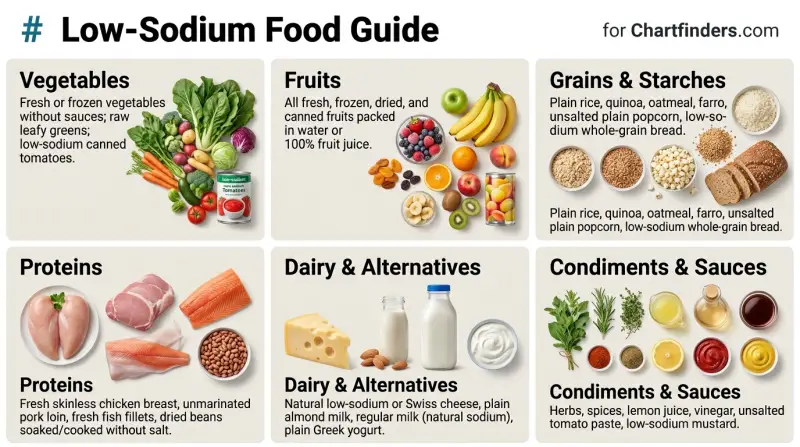
Understanding the Low Sodium Foods Chart and Dietary Guidelines
- The 140 mg Rule: By FDA standards, a food must contain 140 mg or less of sodium per serving to officially qualify as a “low sodium” product.
- Fresh Over Processed: Whole, unprocessed foods—such as fresh fruits, raw vegetables, unmarinated meats, and raw grains—are naturally low in sodium.
- Label Vigilance: Terms like “reduced sodium” mean the product has 25% less sodium than the regular version, which may still be dangerously high. Look for “no added salt” or “sodium-free.”
- Hidden Culprits: Processed grains, condiments, commercial sauces, and baked goods often contribute more daily sodium than the salt shaker.
- Flavor Adaptation: Taste buds adapt over a period of 2 to 4 weeks; as sodium intake decreases, the natural flavors of food become more prominent.
- Potassium Substitution: Many low-sodium commercial products use potassium chloride to mimic salt, which requires medical clearance for individuals with chronic kidney disease.
The human body requires a small amount of sodium to maintain cellular fluid balance, nerve transmission, and muscle contraction. However, modern commercial diets frequently exceed physiological needs. The Dietary Guidelines for Americans recommend limiting sodium intake to less than 2,300 milligrams per day for healthy adults, with even stricter limits (often 1,500 mg or lower) advised for individuals with hypertension, chronic kidney disease, diabetes, or cardiovascular risk factors.
A low sodium foods chart serves as an educational tool and a practical shopping companion. It shifts the dietary away from restriction toward substitution, encouraging consumers to swap high-sodium processed items for nutrient-dense, low-sodium counterparts.
Decoding Sodium Claims on Nutrition Labels
To use a low-sodium chart effectively, one must understand how food manufacturers market sodium content. Regulatory terminology can easily mislead an untrained shopper:
- Sodium-Free or Salt-Free: Contains less than 5 mg of sodium per serving and no added sodium chloride.
- Very Low Sodium: Contains 35 mg or less of sodium per serving.
- Low Sodium: Contains 140 mg or less of sodium per serving.
- Reduced or Less Sodium: The product contains at least 25% less sodium than the standard reference food. (Caution: A soup with 900 mg reduced to 675 mg is still excessively high in sodium).
- Unsalted or No Added Salt: No salt is added during processing, though the food itself may still contain natural background sodium.
Comprehensive Low Sodium Foods Classification Table
The following master chart categorizes common food groups by their sodium profile, highlighting naturally low-sodium options alongside their high-sodium equivalents to guide daily meal planning.
| Food Category | Low-Sodium Choices (Encouraged) | High-Sodium Alternatives (Limit / Avoid) | Typical Sodium Difference |
|---|---|---|---|
| Vegetables | Fresh or frozen vegetables without sauces; raw leafy greens; low-sodium canned tomatoes. | Regular canned vegetables; vegetable juices (e.g., tomato juice); pickles, olives, sauerkraut. | Fresh broccoli has ~30 mg/cup vs. canned regular vegetables at ~300–500 mg/cup. |
| Fruits | All fresh, frozen, dried, and canned fruits packed in water or 100% fruit juice. | Glazed fruits, fruit snacks soaked in sodium-based preservatives (rare, but check dried fruit additives). | Minimal natural sodium across all fresh fruits (< 5 mg per serving). |
| Grains & Starches | Plain rice, quinoa, oatmeal, farro, unsalted plain popcorn, low-sodium whole-grain bread. | Instant flavored rice mixes, boxed scalloped/au gratin potatoes, commercial frozen hash browns, regular crackers. | Plain oats have 0 mg vs. instant flavored packets at ~200–400 mg per serving. |
| Proteins | Fresh skinless chicken breast, unmarinated pork loin, fresh fish fillets, dried beans soaked/cooked without salt. | Cured ham, deli meats, commercial sausages, hot dogs, regular canned tuna or beans with salt added. | Fresh chicken (~65 mg/3 oz) vs. cured ham (~600+ mg/3 oz). |
| Dairy & Alternatives | Natural low-sodium or Swiss cheese, plain almond milk, regular milk (natural sodium), plain Greek yogurt. | Processed cheese slices, cottage cheese, commercial buttermilk, regular canned soups with cream base. | Swiss cheese (~50 mg/oz) vs. processed American cheese (~400 mg/oz). |
| Condiments & Sauces | Herbs, spices, lemon juice, vinegar, unsalted tomato paste, low-sodium mustard. | Regular soy sauce, commercial barbecue sauce, teriyaki sauce, pre-made salsa, table salt. | Regular soy sauce (~900 mg/tbsp) vs. low-sodium tamari (~300 mg/tbsp) or herb blends (0 mg). |
Detailed Sodium Content Reference Table
To assist with precise meal planning, the following table compares exact sodium measurements per standard serving across popular everyday food items:
| Food Item | Serving Size | Average Sodium Content (mg) | Classification |
|---|---|---|---|
| Fresh Apple | 1 medium (182g) | 2 mg | Sodium-Free / Naturally Low |
| Fresh Broccoli | 1 cup chopped (91g) | 30 mg | Very Low Sodium |
| Canned Tomato Juice | 1 cup (240ml) | 615 mg | High Sodium |
| Canned Cream of Celery Soup (prepared) | 1 cup (248g) | 630 mg | High Sodium |
| Cured Bone-In Ham (separable lean) | 3 oz (85g) | 626 mg | High Sodium |
| Reduced-Sodium Pork/Beef Salami | 3 oz (85g) | 623 mg | High Sodium |
| Pork Frankfurter | 1 link (45g) | 620 mg | High Sodium |
| Long-Grain White Rice (cooked, regular) | 1 cup (158g) | 4 mg (unenriched/plain) | Sodium-Free |
| Queen Crab (cooked, moist heat) | 3 oz (85g) | 587 mg | Moderate-High (Natural) |
| Swiss Cheese | 1 oz (28g) | 54 mg | Low Sodium |
| Processed American Cheese | 1 oz (28g) | 406 mg | High Sodium |
Category-by-Category Breakdown of Low-Sodium Options
Fresh Produce: Fruits and Vegetables
Fresh produce is inherently low in sodium and rich in potassium, a mineral that helps counteract the blood-pressure-raising effects of sodium by promoting renal sodium excretion and relaxing vascular walls.
- Fruits: Apples, bananas, berries, citrus fruits, melons, and stone fruits contain negligible sodium (typically under 5 mg per serving). They serve as ideal snacks and dessert replacements for sodium-laden processed sweets.
- Vegetables: Leafy greens (spinach, kale, Swiss chard), cruciferous vegetables (broccoli, cauliflower), root vegetables (carrots, sweet potatoes), and squashes are naturally low in sodium. However, preparation matters: steaming or roasting vegetables without adding table salt preserves their integrity. Avoid canned vegetables unless explicitly labeled “No Added Salt” or “Low Sodium,” as manufacturers use sodium chloride as a firming agent and preservative.
Grains, Cereals, and Starches
Grains form the bulk of daily caloric intake, but they are also a primary vehicle for hidden sodium. Commercial bread, in particular, utilizes salt not only for flavor but to control yeast fermentation and strengthen gluten structure.
- Unprocessed Grains: Brown rice, white rice, bulgur, barley, quinoa, amaranth, and rolled oats contain minimal sodium in their natural, raw states.
- Breads and Baked Goods: Standard commercial sliced bread can contain 100 to 200 mg of sodium per single slice. Over the course of a sandwich, bread alone can account for nearly 400 mg of sodium. Choosing certified low-sodium bread or naturally salt-free whole grains drastically curtails intake.
- Snacks: Regular potato chips, pretzels, and salted crackers are exceptionally high in surface sodium. Unsalted popcorn, plain rice cakes, and raw nuts provide satisfying alternatives.
Proteins: Meat, Poultry, Fish, and Legumes
Unprocessed animal and plant proteins are naturally low in sodium, but processing, curing, brining, and injecting drastically alter their profiles.
- Poultry and Meats: Fresh, raw cuts of beef, pork, lamb, and skinless poultry contain only their naturally occurring intracellular sodium (typically 50 to 80 mg per 3-ounce serving). Conversely, processed meats—such as bacon, sausage, salami, bologna, deli turkey, and cured ham—are subjected to heavy salt cures, frequently packing 500 to 1,000 mg of sodium per serving.
- Seafood: Fresh fish fillets (cod, salmon, tilapia) are naturally low in sodium. Frozen fish fillets, however, are frequently treated with sodium polyphosphates to retain moisture during freezing, which can push sodium levels above 300 mg per serving. Always check the ingredient label for sodium additives.
- Legumes and Plant Proteins: Dried beans, lentils, and peas are exceptionally low in sodium. Canned beans, while convenient, are typically packed in brine containing significant amounts of sodium. Rinsing canned beans under running water for 60 seconds can reduce their sodium content by up to 30%, though purchasing “no added salt” canned varieties is far more effective.
Dairy and Dairy Alternatives
Dairy products contain naturally occurring sodium derived from the milk’s mineral composition, but manufacturing processes often amplify these levels significantly.
- Milk and Yogurt: Standard cow’s milk contains about 120 mg of sodium per cup, which is naturally occurring. Plain yogurt has a similar profile. While not “low sodium” by strict FDA definitions (<140 mg), these levels fit comfortably into a balanced diet.
- Cheese: Cheese requires salt for coagulation, moisture control, and preservation. Soft and processed cheeses (like feta, blue cheese, processed American slices, and cottage cheese) are exceptionally high in sodium, often ranging from 400 to 800 mg per ounce. Swiss cheese, fresh mozzarella, and ricotta are among the lowest sodium cheese options available.
Hidden Sodium Traps in the Modern Diet
The greatest challenge in adhering to a low-sodium regimen is not the salt shaker on the dining table—which accounts for only a minor fraction of total dietary sodium—but rather the hidden sodium embedded within manufactured foods. Understanding where sodium hides prevents accidental dietary overages.
Commercial Sauces, Dressings, and Condiments
Condiments are concentrated flavor delivery systems that frequently rely on salt and sodium-based preservatives (such as sodium benzoate and monosodium glutamate) to achieve shelf stability and palatability.
- Soy Sauce and Tamari: Traditional soy sauce contains upwards of 900 mg of sodium per tablespoon. Low-sodium tamari reduces this, but still requires moderation.
- Tomato-Based Sauces: Commercial pasta sauces, salsas, and ketchup utilize salt to balance the natural acidity of tomatoes. A single half-cup serving of commercial marinara sauce can easily contain 500 mg of sodium.
- Salad Dressings: Bottled dressings combine salt with emulsifiers, making them deceptive sodium contributors.
Processed Bakery Products and Breakfast Cereals
Many consumers are shocked to learn that breakfast cereals and baked goods contribute heavily to daily sodium totals. Baking soda (sodium bicarbonate) and baking powder (sodium aluminum sulfate) are chemical leavening agents used to make cakes, muffins, and quick breads rise. Additionally, commercial breakfast cereals often contain significant sodium to enhance flavor stability across extended shelf lives.
Practical Strategies for Transitioning to Low-Sodium Eating
Transitioning to a low-sodium diet requires both culinary adjustment and physiological adaptation. Human taste receptors for sodium exhibit neuroplasticity; they adapt over a period of two to four weeks. Initially, low-sodium food may taste bland or flat, but as taste receptors upregulate their sensitivity, the natural flavors of food emerge with striking clarity.
Flavor Enhancement Without Salt
Eliminating salt does not mean eliminating flavor. A robust culinary toolkit relies on aromatic herbs, spices, acids, and umami boosters to create depth and complexity:
- Acids: Fresh lemon juice, lime juice, apple cider vinegar, and balsamic vinegar brighten dishes in the exact same physiological way salt does—by stimulating salivary glands and enhancing perception of other flavors.
- Aromatics: Garlic, onions, shallots, ginger, and scallions release volatile aromatic compounds that trick the brain into registering deep savory satisfaction.
- Herbs and Spices: Rosemary, thyme, oregano, basil, cumin, smoked paprika, coriander, and black pepper add flavor dimensions without a single milligram of sodium.
- Umami Agents: Mushrooms, nutritional yeast, toasted sesame oil, and dried seaweed (in moderation) provide the savory “fifth taste” (umami) that compensates for the absence of sodium chloride.
Step-by-Step Grocery Shopping Framework
- Shop the Perimeter: Focus the majority of your shopping trip on the outer aisles of the grocery store, where fresh produce, raw meats, fresh poultry, and fresh seafood are housed.
- Inspect the Middle Aisles Carefully: When venturing into inner aisles for grains, canned goods, or dried beans, immediately turn packages over to the Nutrition Facts label.
- Calculate Sodium-to-Calorie Ratio: As a general rule of thumb for packaged foods, ensure the sodium content (in milligrams) does not exceed the number of calories per serving. For example, a 150-calorie food should ideally contain fewer than 150 mg of sodium.
- Prioritize “No Added Salt” Seals: Select canned tomatoes, beans, and broths explicitly marked “No Added Salt” or “Unsalted.”
Common Mistakes, Misconceptions, and Edge Cases
Navigating low-sodium diets is prone to several common pitfalls and edge cases that can undermine health goals if left unrecognized.
- Mistake 1: Relying Solely on Sea Salt or Kosher Salt. Many consumers believe that switching from refined white table salt to pink Himalayan sea salt, grey sea salt, or kosher salt reduces sodium intake. Chemically, these specialty salts are still primarily sodium chloride (approx. 40% sodium by weight). While their crystal structure or mineral impurities differ slightly, their physiological impact on blood pressure is essentially identical.
- Mistake 2: Ignoring Medication and Supplement Sodium. Effervescent over-the-counter pain relievers, antacids, and certain prescription medications are formulated with sodium compounds to help them dissolve in water. Some single doses can contain up to 500 mg of hidden sodium. Individuals on strict sodium restrictions should review all medications with a pharmacist or physician.
- Mistake 3: Assuming “Healthy” Restaurant Options are Low Sodium. Restaurant meals are notoriously high in sodium. Chefs rely heavily on butter, salt, and seasoned broths to deliver consistent, craveable flavors. Even a grilled chicken salad at a casual dining restaurant can harbor over 1,000 mg of sodium due to pre-marinated meat, salted salad dressings, and cheese toppings.
- Mistake 4: Discarding Potassium Chloride Without Medical Guidance. Many commercial “salt substitutes” replace sodium chloride with potassium chloride. While beneficial for lowering blood pressure in the general population, individuals with chronic kidney disease or those taking potassium-sparing diuretics must avoid potassium chloride supplements unless explicitly cleared by a nephrologist or physician, as hyperkalemia (high blood potassium) can be life-threatening.
- Edge Case Considerations for Athletes: Endurance athletes or individuals working in extreme heat experience significant sodium losses through sweat (hyponatremia risk). While standard low-sodium charts benefit the general population with hypertension, highly active individuals require personalized electrolyte management under sports medicine guidance.
Frequently Asked Questions
According to U.S. Food and Drug Administration (FDA) regulations, a packaged food must contain 140 milligrams (mg) or less of sodium per standard serving to legally carry the “low sodium” label claim. For individuals on medically supervised strict sodium diets (such as a 2,000 mg daily total), evaluating individual serving sizes against this 140 mg benchmark is essential.
Rinsing canned beans in a colander under cold running water for approximately 60 seconds removes about 30% to 40% of the surface sodium present in the canning liquid. While helpful in a pinch, it does not remove sodium that has penetrated the bean interior during the canning process. Purchasing canned beans labeled “No Added Salt” or cooking dry beans from scratch remains far more effective.
Clinical observations indicate that human taste bud receptors adapt to reduced sodium environments over a period of 2 to 4 weeks. During the initial transition phase, food may taste bland or unappealing. However, once the neurological adaptation occurs, the natural sodium and complex flavor profiles of whole foods become much more perceptible and satisfying.
No. Chemically, all culinary salts—including table salt, sea salt, kosher salt, and Himalayan pink salt—consist of approximately 40% sodium chloride by weight. While unrefined sea salts contain trace minerals, their sodium content per teaspoon is virtually identical to standard table salt. Swapping one salt for another does not reduce dietary sodium intake.
Because restaurants are not required to print nutrition facts on standard menus, diners should look for descriptive menu keywords indicating high sodium content, such as “cured,” “smoked,” “marinated,” “brined,” “pickled,” or “in soy/teriyaki glaze.” Always request sauces, dressings, and gravies on the side (“sauce on the side”), and ask the server or chef to prepare proteins plain, grilled, or steamed without added salt or seasoned butter.
Manufacturers often use potassium chloride to replicate the salty taste of sodium chloride in low-sodium soups, broths, and snack foods. While potassium helps lower blood pressure for most individuals, patients with chronic kidney disease (CKD) or those prescribed potassium-sparing diuretics cannot effectively excrete excess potassium. This leads to hyperkalemia, a dangerous condition that can cause cardiac arrhythmias.
Conclusion
Mastering a low-sodium lifestyle is not an exercise in deprivation, but rather an intentional return to whole, nutrient-dense foods. By utilizing a reliable low sodium foods chart, learning to scrutinize food labels beyond front-of-package marketing claims, recognizing hidden culinary traps, and exploring the vast world of herbs, spices, and natural acids, individuals can protect their cardiovascular health while elevating their culinary experiences. Emphasizing fresh produce, unmarinated lean proteins, and whole grains transforms the kitchen into a sanctuary of vibrant, heart-healthy flavor.