
Dietary management of kidney stone prevention relies heavily on the nuanced understanding of organic acids found in plant-based and processed foods. Oxalates, or oxalic acid, are naturally occurring compounds synthesized by many plants as a metabolic end-product. When consumed, these compounds bind with calcium in the urinary tract, occasionally crystallizing into hard mineral deposits known as calcium-oxalate stones. Because endogenous production accounts for a significant portion of urinary oxalate, dietary choices directly influence saturation levels in the kidneys. Navigating this nutritional landscape requires more than a simple list of forbidden ingredients; it demands a structured, data-driven framework that accounts for serving sizes, preparation methods, and biochemical interactions like calcium binding.
(Reference: [PDF] Oxalate in Food)For individuals diagnosed with hyperoxaluria or recurrent nephrolithiasis, establishing dietary boundaries without sacrificing nutritional adequacy is a persistent challenge. Many nutrient-dense superfoods—including leafy greens, nuts, seeds, and dark chocolate—happen to be exceptionally high in oxalates. Consequently, patients often find themselves overwhelmed by conflicting dietary advice or oversimplified lists that fail to distinguish between trace amounts and hazardous loads. This comprehensive resource deconstructs the science of oxalates, details how to read and apply an oxalate food chart, and provides actionable strategies to minimize stone risk while maintaining a balanced, sustainable diet.
Explore our detailed breakdown on Picky Eater Food Chart.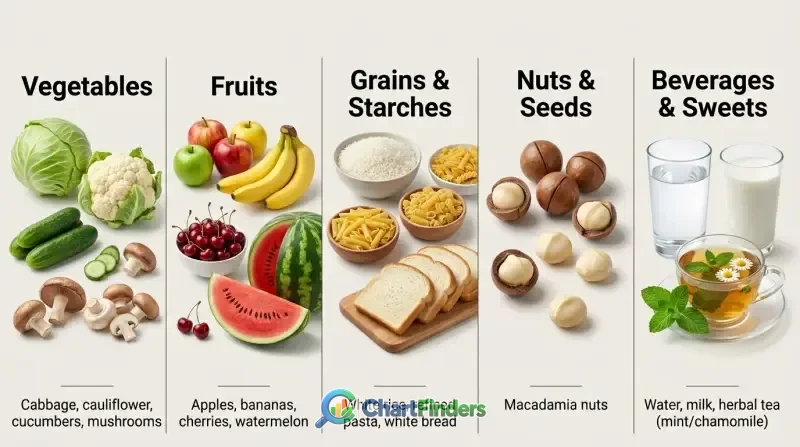
Understanding the Oxalate Food Chart
- Oxalate content is typically classified into four tiers: low (under 2 mg per serving), moderate (2 to 10 mg), high (10 to 25 mg), and very high (over 25 mg per serving).
- Cooking methods such as boiling and steaming can significantly leach water-soluble oxalates out of vegetables, whereas dry roasting or baking does not reduce content.
- Consuming adequate dietary calcium with high-oxalate meals prevents kidney stones by binding oxalates in the gastrointestinal tract before they reach the kidneys.
- Endogenous oxalate synthesis (what the body produces naturally) often outweighs dietary intake, meaning extreme zero-oxalate diets are unnecessary and potentially harmful.
- Hydration remains a critical co-factor; urine volume must be maintained alongside oxalate restriction to lower mineral supersaturation.
An effective oxalate food chart serves as a practical map for clinical nutrition, organizing edible items into clear categories based on their milligrams (mg) of oxalic acid per standard serving. To use these charts effectively, clinicians and dietitians generally divide foods into distinct bands. Low-oxalate foods contain fewer than 2 mg per serving and can be consumed freely. Moderate-oxalate foods range from 2 to 10 mg, requiring mindful portion control. High-oxalate foods contain 10 to 25 mg, while very high-oxalate foods exceed 25 mg per serving and are strictly limited or avoided entirely by high-risk stone-formers.
Understanding these quantitative thresholds prevents unnecessary dietary restriction. Many people mistakenly eliminate entire food groups because an item appears on a general “avoid” list, even when a standard culinary portion contains negligible amounts. Conversely, concentrated ingredients like wheat germ, cocoa powder, and starfruit can deliver massive oxalate loads in deceptively small volumes. A structured food chart eliminates guesswork, providing concrete numerical data that allows patients to tailor their intake under the guidance of a physician or registered dietitian.
| Food Category | Low Oxalate (<2 mg) | Moderate Oxalate (2–10 mg) | High Oxalate (10–25 mg) | Very High Oxalate (>25 mg) |
|---|---|---|---|---|
| Vegetables | Cabbage, cauliflower, cucumbers, mushrooms | Broccoli, carrots, green beans | Celery, sweet potatoes, leeks | Spinach, beets, rhubarb, Swiss chard |
| Fruits | Apples, bananas, cherries, watermelon | Blueberries, grapes, pineapples | Oranges, grapefruits, raspberries | Starfruit, blackberries, kiwi |
| Grains & Starches | White rice, refined pasta, white bread | Oatmeal, brown rice, corn tortillas | Whole wheat bread, grits | Wheat bran, wheat germ, buckwheat |
| Nuts & Seeds | Macadamia nuts | Coconut, pumpkin seeds | Peanuts, sunflower seeds | Almonds, cashews, pecans, sesame seeds |
| Beverages & Sweets | Water, milk, herbal tea (mint/chamomile) | Apple juice, white wine | Coffee (brewed), black tea | Cocoa, hot chocolate, instant tea, soy milk |
Reading this table correctly requires evaluating both the concentration and the standard portion size. For instance, while a single carrot might fall into the moderate bracket, juicing five pounds of carrots concentrates the soluble oxalates into a very high-risk beverage. Contextualizing these categories with culinary practices and physiological absorption rates ensures safer dietary execution.
The Biochemical Mechanics of Oxalates
Oxalic acid is a strong organic dicarboxylic acid. In the human body, it serves no known essential metabolic function. It exists in two primary forms within foods: soluble oxalates (bound to sodium, potassium, or hydrogen ions) and insoluble oxalates (bound to minerals like calcium, magnesium, or iron).
Soluble oxalates present the highest clinical concern because they are readily absorbed across the intestinal mucosa into the bloodstream. Once in circulation, excess oxalate is filtered by the kidneys. When urinary concentrations of oxalate and calcium exceed the saturation point, they precipitate into microscopic crystals. These crystals can attach to the renal epithelium, growing into clinical nephrolithiasis. Insoluble oxalates, by contrast, largely pass unabsorbed through the gastrointestinal tract because the tight bond between the oxalate and mineral ions prevents cellular uptake.
Classification Tiers and Serving Sizes
Evaluating foods strictly by concentration without considering portion size leads to frequent dietary errors. A food may feature a high concentration of oxalates per 100 grams, but if a normal culinary serving is only 5 grams (such as a dusting of cocoa powder or a garnish of parsley), the actual physiological impact is minimal.
Standardizing the measurement unit to typical household portions—cups, ounces, tablespoons, or individual units—transforms raw laboratory data into usable nutritional guidance. Dietitians look at the total daily load rather than demonizing individual ingredients. A cumulative daily intake target for high-risk stone formers is frequently capped at 50 mg to 100 mg of total oxalates per day, though exact recommendations must be personalized based on 24-hour urine collection results.
High-Oxalate Foods to Restrict or Avoid
Certain agricultural crops accumulate extraordinary levels of oxalates as a natural defense mechanism against herbivores and environmental stressors. Identifying these items is the of any low-oxalate protocol. While eliminating these foods entirely is rarely mandatory unless specifically directed by a nephrologist or urologist, minimizing their frequency and volume is essential for preventing stone recurrence.
The most potent dietary sources of oxalates span several distinct agricultural families. Amaranthaceae (such as spinach and Swiss chard), Polygonaceae (rhubarb), and certain members of the Chenopodiaceae family top the list by a wide margin. , industrial processing can concentrate oxalates in unexpected consumer goods.
Leafy Greens and Root Vegetables
Leafy greens represent the single greatest dietary obstacle on a low-oxalate regimen. Raw baby spinach, cooked mature spinach, and Swiss chard routinely test at over 500 mg of oxalate per 100-gram serving—dwarf amounts found in almost any other food category. Beets and beet greens are similarly dense, with the taproot and leaves both packing high concentrations of soluble and insoluble salts.
- Spinach: Ranges from 400 mg to over 900 mg per 100g depending on harvest maturity and soil composition.
- Swiss Chard: Frequently exceeds 600 mg per 100g serving.
- Beets and Beet Greens: Roots contain roughly 100–200 mg per 100g; greens can exceed 500 mg.
- Rhubarb: Raw stalks can reach up to 500 mg to 1000 mg per 100g, making it one of the most concentrated plant sources known.
- Okra and Sweet Potatoes: Moderate-to-high culprits, with sweet potatoes containing up to 30–50 mg per medium-sized tuber.
Nuts, Seeds, and Grain Products
Snack foods and alternative flours frequently harbor deceptive quantities of oxalates. Tree nuts and their derivatives are notorious for high concentrations. Almonds, cashews, and peanuts are among the worst offenders, often containing between 100 mg and 500 mg of oxalate per 100-gram portion. For individuals who enjoy nut milks or nut flours in baking, these concentrated doses can rapidly push daily totals past recommended thresholds.
Grains also vary wildly. Refined white flour and white rice are remarkably low in oxalates because the outer bran and germ layers—where plant minerals and organic acids concentrate—are stripped away during milling. Conversely, whole-wheat products, wheat germ, wheat bran, and pseudograins like buckwheat and amaranth are classified as high or very high oxalate sources.
Beverages and Confections
Liquid intake contributes significantly to the daily oxalate load. Black tea is a major contributor; prolonged steeping extracts high levels of soluble oxalates from Camellia sinensis leaves. Instant teas and bottled iced tea mixes are often even more concentrated.
Cocoa beans are naturally high in oxalates, meaning dark chocolate, cocoa powder, chocolate syrup, and milk chocolate deliver substantial loads. Additionally, soybean-derived beverages (soy milk, tofu made with calcium sulfate versus magnesium chloride) can vary, though traditional soy milk is generally considered a high-oxalate beverage compared to dairy milk or almond milk (depending on the almond concentration).
Detailed Oxalate Content Reference Table
To assist with precise meal planning, the following reference table breaks down specific foods by typical serving size and their corresponding oxalate concentration category, based on clinical nutrition databases.
| Food Item | Standard Serving Size | Oxalate Level | Approximate Oxalate (mg) |
|---|---|---|---|
| Spinach (cooked) | 1/2 cup | Very High | 750+ mg |
| Rhubarb (cooked) | 1/2 cup | Very High | 500+ mg |
| Almonds | 1 oz (approx. 23 nuts) | Very High | 120–150 mg |
| Baked Potato (with skin) | 1 medium | High | 40–70 mg |
| Black Tea (brewed) | 1 cup (8 oz) | High | 10–20 mg |
| Peanut Butter | 2 tablespoons | High | 15–25 mg |
| Brown Rice (cooked) | 1 cup | Moderate | 5–10 mg |
| Carrots (raw) | 1/2 cup sliced | Moderate | 3–5 mg |
| Blueberries | 1/2 cup | Moderate | 2–5 mg |
| White Rice (cooked) | 1 cup | Low | < 2 mg |
| Eggs | 1 large | Low | 0 mg |
| Cheddar Cheese | 1 oz | Low | 0 mg |
Low-Oxalate Alternatives and Safe Selections
Adopting a low-oxalate lifestyle does not mean transitioning to an austere, unpalatable diet. A vast array of nutrient-dense, flavorful foods contain minimal to zero oxalates. Building meals around these safe selections ensures adequate micronutrient intake, fiber, and culinary satisfaction without increasing renal stone risk.
Proteins from animal sources—including beef, poultry, pork, eggs, fish, and shellfish—contain virtually zero oxalates. Similarly, standard dairy products (milk, cheese, butter, heavy cream) are entirely oxalate-free and provide an invaluable therapeutic advantage: abundant calcium.
Safe Fruits and Vegetables
A wide variety of produce fits comfortably into a low-oxalate meal plan. These options allow individuals to maintain high intake of dietary fiber, vitamins C and A, and antioxidants without compromising kidney health.
- Cruciferous Vegetables: Cauliflower, broccoli (in moderate portions), and cabbage are generally safe or low-moderate.
- Cucurbits: Cucumbers, zucchini, summer squash, and pumpkins (standard culinary portions) contain very low levels.
- Root Vegetables: Regular white potatoes (when peeled and properly boiled) have drastically lower oxalate content than sweet potatoes. Radishes and turnips are also safe.
- Fruits: Bananas, apples, melons (cantaloupe, honeydew, watermelon), cherries, grapes, and papayas offer sweet, hydrating options with minimal oxalate impact.
Dairy and Animal Proteins as Therapeutic Tools
Far from being neutral bystanders, animal proteins and dairy products actively assist in mitigating the dangers of dietary oxalates. When calcium is consumed concurrently with an oxalate-containing meal, the calcium ions bind chemically to the oxalate molecules in the lumen of the stomach and intestines. This forms an insoluble calcium-oxalate complex (calcium oxalate precipitate) that cannot cross the intestinal wall. Instead, it is excreted harmlessly through the stool.
This biochemical mechanism underpins a core dietary rule: never restrict dietary calcium while restricting oxalates. Eliminating calcium increases free oxalate absorption in the gut, paradoxically raising urinary oxalate excretion and worsening stone risk. Pairing high-oxalate foods with a source of calcium—such as adding milk to oatmeal, eating cheese with crackers, or consuming yogurt with berries—neutralizes much of the dietary threat.
Preparation Methods to Reduce Oxalate Content
The total oxalate content listed in a standard food chart is not always static. Agricultural factors, climate, and maturity play a role, but culinary preparation techniques exert profound control over the final soluble oxalate load consumed.
Because oxalic acid is highly water-soluble, thermal processing that involves liquid extraction can leach significant portions of oxalates out of plant tissues. Understanding how to manipulate cooking parameters allows individuals to safely enjoy certain moderately high-oxalate vegetables that would otherwise be restricted.
Boiling, Steaming, and Leaching
Boiling is by far the most effective culinary method for reducing soluble oxalates. When vegetables like spinach, green beans, or root crops are submerged in a large volume of boiling water, soluble oxalates diffuse out of the cellular matrix and into the cooking water.
- The Water Ratio: Use a high water-to-vegetable ratio (at least 5:1 or greater) to maximize diffusion gradients.
- Discard the Liquid: Never consume or reuse the boiling water for soups, broths, or sauces, as it contains the leached oxalic acid.
- Effectiveness: Studies show that boiling chopped spinach or leafy greens for 6 to 10 minutes can reduce soluble oxalate content by 30% to as much as 80%, depending on surface area and chopping fineness.
Steaming, by contrast, is far less effective. While steaming cooks the food, the moisture condensation does not provide an outward reservoir for the oxalates to leach into, meaning most of the organic acids remain trapped within the vegetable tissue. Dry cooking methods such as roasting, baking, or air-frying have virtually zero impact on oxalate reduction.
Fermentation and Sprouting
Microbial fermentation and grain sprouting represent traditional food preparation techniques that can degrade oxalates over time. Certain lactic acid bacteria (such as strains of Lactobacillus and Bifidobacterium) and fungal enzymes possess oxalolytic activity, breaking down oxalic acid into simpler non-harmful byproducts during fermentation.
Similarly, soaking and sprouting grains, legumes, and seeds activates endogenous plant enzymes (phytases and oxalases) that metabolize storage compounds. While these methods do not eliminate oxalates entirely, combining soaking, rinsing, and fermentation can noticeably lower the net oxalate burden of whole grains and legumes, making them safer components of a kidney-conscious diet.
Clinical Context and Common Dietary Mistakes
Applying an oxalate food chart incorrectly can lead to nutritional deficiencies, metabolic stress, and unnecessary dietary anxiety. Clinical experience reveals several pervasive pitfalls that patients and even wellness practitioners frequently encounter when implementing low-oxalate protocols.
Recognizing these errors ensures that dietary changes are clinically effective, physiologically safe, and sustainable over the long term.
The Danger of Over-Restriction
The most common clinical error is attempting a “zero-oxalate” diet. Because the human liver synthesizes endogenous oxalates as part of normal amino acid and glyoxylate metabolism (accounting for roughly 50% to 80% of total urinary oxalate), driving dietary intake to absolute zero is impossible and metabolically futile.
, extreme restriction eliminates entire categories of nutrient-dense whole foods—such as antioxidant-rich berries, whole grains, and healthy fats—leading to fiber deficiencies, micronutrient shortfalls, and severe dietary burnout. A balanced approach focuses on moderation, strategic pairing, and hydration rather than total starvation of plant nutrients.
Ignoring the Calcium-Oxalate Pairing Rule
As established earlier, eliminating calcium in an effort to “purify” the diet backfires dramatically. Without sufficient calcium in the digestive tract to bind free oxalate ions, intestinal absorption increases sharply. This phenomenon leads to hyperoxaluria—elevated urinary oxalate excretion—which accelerates kidney stone formation.
Patients must maintain normal, recommended daily intakes of dietary calcium (typically 1,000 mg to 1,200 mg per day for adults, depending on age and sex), ideally sourced from whole foods or targeted supplements taken strictly with meals.
Overlooking Fluid Intake and Urine Volume
Dietary modification is only one pillar of stone prevention. The single most powerful intervention against kidney stone formation is high fluid intake. Diluting the urine lowers the concentration of all stone-forming salts (calcium, oxalate, uric acid, and cystine), preventing them from reaching supersaturation thresholds.
An oxalate food chart must always be paired with hydration goals designed to achieve a minimum urine output of 2.0 to 2.5 liters per day. Water remains the gold standard, supplemented optionally with citrus-rich beverages like lemonade, as citrate is a potent natural inhibitor of calcium crystallization.
Frequently Asked Questions
No. While boiling vegetables in a large volume of water can reduce soluble oxalates by 30% to 80% (provided the cooking water is discarded), it does not remove insoluble oxalates bound to minerals, nor does it affect dry-heat cooking methods like roasting, baking, or steaming.
Pairing spinach with a calcium source like cheese helps bind soluble oxalates in the digestive tract, preventing them from being absorbed into the bloodstream. However, because spinach contains such an exceptionally massive concentration of oxalates, even dairy binding cannot neutralize all of it. High-risk stone-formers should still limit or avoid spinach regardless of pairing.
No. Dietary oxalates are just one contributing factor. Other major causes include low fluid intake, high sodium consumption, excessive animal protein intake, high vitamin C supplementation, and metabolic conditions such as primary hyperoxaluria or renal tubular acidosis. Most urinary stones are composed of calcium oxalate.
For individuals with a history of calcium-oxalate kidney stones, nephrologists and clinical dietitians commonly recommend restricting total dietary oxalate intake to between 50 mg and 100 mg per day. Exact targets depend on 24-hour urine test results, serum calcium levels, and individual metabolic risk factors.
Boiling water is used to brew tea, but because the tea leaves remain steeped in the water you drink, the leached oxalates stay in the beverage. Prolonged steeping of black tea extracts very high levels of soluble oxalates. Switching to herbal teas like peppermint or chamomile significantly reduces or eliminates oxalate intake.
Conclusion
Navigating an oxalate food chart requires a balanced understanding of biochemistry, portion control, and culinary preparation. While restricting high-oxalate items like spinach, rhubarb, and nuts is a proven strategy for reducing calcium-oxalate kidney stone recurrence, it must be executed thoughtfully. Extreme elimination diets are unnecessary and counterproductive. By prioritizing adequate hydration, maintaining proper calcium intake to bind oxalates in the gut, and utilizing boiling techniques to leach soluble compounds from vegetables, individuals can protect their renal health while enjoying a diverse, nutritious diet. Always consult a urologist, nephrologist, or registered dietitian before making major dietary adjustments, especially when managing diagnosed kidney disease or recurrent nephrolithiasis.
2 thoughts on “Oxalate Food Chart”