
Few domestic feline breeds capture the imagination quite like the Maine Coon. Renowned for their rugged double coats, tufted ears, friendly dispositions, and astonishing physical scale, they are often referred to as the “gentle giants” of the cat world. However, this grand stature comes with a unique developmental timeline that often confuses new pet parents. Unlike standard domestic cats that reach their adult size within their first year, Maine Coons undergo a prolonged, multi-year growth trajectory.
(Reference: Maine Coon Size: Weight Charts, Height, and Growth Timeline)Understanding this trajectory requires more than a passing glance at a standard feline growth chart. Because these cats take up to five years to achieve their ultimate skeletal and muscular mass, tracking their progress month by month demands specialized knowledge. A proper Maine Coon weight chart acts as an essential roadmap for breeders, owners, and veterinarians alike, helping to distinguish between normal, healthy development and potential nutritional or medical issues. This comprehensive guide explores every facet of Maine Coon growth patterns, from neonatal milestones to geriatric maintenance, ensuring your gentle giant thrives at every stage of life.
Explore our detailed breakdown on Vintage Crystal Glass Identification Chart [Full Reference Chart].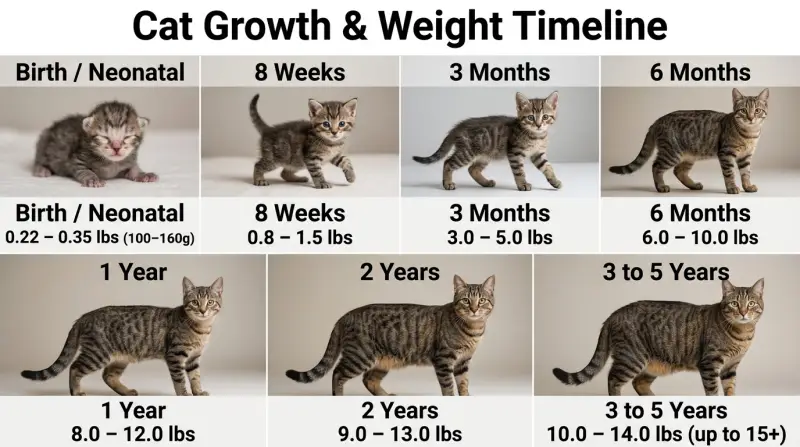
Maine Coon Weight Chart
- Maine Coons are a slow-maturing giant breed, taking between 3 to 5 years to reach their full physical potential.
- Adult male Maine Coons typically weigh between 13 and 18 lbs, though exceptionally large lines frequently reach 20 lbs or more.
- Adult females generally range from 8 to 12 lbs, displaying a more moderate yet still substantial frame.
- Growth is most rapid during the first 18 months of life, after which skeletal growth slows and muscle mass development takes over.
- Regular weight monitoring using a digital pet scale helps detect early signs of nutritional imbalances or joint stress.
Tracking the development of a giant-breed kitten requires specialized reference points. Below is a comprehensive breakdown of average weight ranges across key developmental milestones, categorized by sex, alongside physiological focus areas.
| Age | Average Weight (Females) | Average Weight (Males) | Developmental Focus |
|---|---|---|---|
| Birth / Neonatal | 0.22 – 0.35 lbs (100–160g) | 0.25 – 0.40 lbs (110–180g) | Initial nursing, rapid daily weight gain, thermal regulation. |
| 8 Weeks | 0.8 – 1.5 lbs | 1.0 – 1.8 lbs | Weaning transition, solid food introduction, motor skill development. |
| 3 Months | 3.0 – 5.0 lbs | 4.0 – 6.5 lbs | Immune system strengthening, rapid bone elongation, high activity. |
| 6 Months | 6.0 – 10.0 lbs | 8.0 – 12.0 lbs | Teething transition, adolescent growth spurt, muscle building. |
| 1 Year | 8.0 – 12.0 lbs | 12.0 – 16.0 lbs | Initial skeletal frame established; secondary coat development. |
| 2 Years | 9.0 – 13.0 lbs | 14.0 – 18.0 lbs | Filling out; broadening of chest and head structure. |
| 3 to 5 Years | 10.0 – 14.0 lbs (up to 15+) | 15.0 – 22.0+ lbs | Full adult muscle mass, bone density, and final coat maturity. |
When reviewing the table above, keep in mind that these figures represent broad averages derived from healthy, purebred populations. Individual genetics, line variations (such as European versus American types), and overall health play massive roles in determining where a specific cat will land on the spectrum.
Understanding the Maine Coon Growth Timeline
The journey from a fragile newborn kitten to a formidable 20-pound adult is marked by distinct physiological phases. Unlike standard cats that level off in size around month twelve, Maine Coons experience an extended adolescence.
The First Year: The Exponential Phase
During the first twelve months, a Maine Coon kitten grows at a staggering rate. They often multiply their birth weight tenfold within the first few months. This period is characterized by intense bone elongation and organ development. High-protein, high-calorie nutrition is non-negotiable during this window to support their structural demands without depleting their physical reserves.
Years Two to Three: Filling Out and Broadening
Once the initial skeletal frame is largely built, the cat enters a secondary phase. Between one and three years of age, Maine Coons begin to “fill out.” Their chests widen, their muscular structure thickens, and their facial features—particularly the characteristic squared muzzle and high cheekbones—become much more pronounced. Weight gain during this phase is driven more by muscle mass and dense bone density than simple linear growth.
Years Four and Five: The Final Polish
Many owners are surprised to learn that Maine Coons can continue adding subtle weight and substance well into their fourth and fifth years. This is especially true for intact males and certain European lines bred specifically for larger bone structure. Coat density also peaks during this timeframe, adding visible volume and a heavier tactile feel.
European vs. American Maine Coon Lines: Size Differences
A critical factor influencing any Maine Coon weight chart analysis is the distinction between European and American breeding lines. Over the decades, selective breeding practices on separate continents have produced distinct physical typologies.
- American Lines: Generally feature a slightly more refined, traditional look. While still very large compared to domestic shorthairs, they tend to have leaner frames, slightly smaller ears, and weights that sit comfortably in the lower-to-middle ranges of the breed standard.
- European Lines: Bred heavily for extreme, dramatic features. European Maine Coons typically showcase heavy bone structures, broader chests, extremely boxy muzzles, and large, lynx-tipped ears. Consequently, European males frequently push past the 20-pound mark, with exceptional specimens reaching 22 to 25 pounds without being overweight.
Nutritional Requirements Across Growth Stages
Fueling a giant-breed kitten requires precision. Because Maine Coons grow for up to five years, improper nutrition can lead to severe developmental issues, including skeletal deformities and joint stress.
| Life Stage | Primary Nutritional Need | Key Ingredients to Prioritize | Feeding Approach |
|---|---|---|---|
| Kitten (0–12 Months) | High calorie, dense protein, balanced calcium-to-phosphorus ratio. | Real meat first (chicken, turkey, rabbit), DHA for brain development. | Free-feeding or frequent measured meals; high energy density. |
| Junior (1–3 Years) | Joint support, sustained muscle growth, controlled energy. | Glucosamine, chondroitin, high biological value proteins. | Structured meal times to prevent overeating as metabolism shifts. |
| Adult (3+ Years) | Maintenance of lean muscle, weight control, urinary health. | L-carnitine, moderate fats, high-quality fiber. | Portion-controlled feeding based on activity level and spay/neuter status. |
Providing high-moisture foods alongside high-quality kibble is particularly important for Maine Coons, as their large frames require robust hydration to support kidney function and joint lubrication.
Health Implications of Abnormal Weight
Monitoring your Maine Coon against an accurate weight chart helps catch potential health crises early. Both underweight and overweight conditions carry significant risks for this specific breed.
Risks of Underweight Status
If a growing kitten falls significantly below the expected growth curve, it may indicate underlying parasitism, congenital heart issues (such as Hypertrophic Cardiomyopathy – HCM), or malabsorption syndromes. Because their bodies demand immense resources to build large bone structures, even a minor illness can cause catastrophic weight loss if not addressed immediately by a veterinarian.
Risks of Overweight Status
Conversely, excess weight places immense pressure on a Maine Coon’s skeletal system. The breed is already predisposed to joint disorders such as Hip Dysplasia and Patellar Luxation. Carrying extra pounds accelerates cartilage wear and tear, leading to early-onset osteoarthritis. Obesity in Maine Coons also elevates the risk of feline diabetes and hepatic lipidosis.
Practical Body Condition Scoring (BCS)
Numbers on a scale do not tell the whole story. A muscular, heavy-boned male Maine Coon might weigh 18 pounds and be in prime physical condition, while another cat of the exact same size might be obese if that weight is composed primarily of fat. Vets use a 9-point Body Condition Scoring system to evaluate fat distribution:
- Score 1–3 (Underweight): Ribs, lumbar vertebrae, and pelvic bones are easily visible from a distance. No discernible body fat; severe muscle wasting.
- Score 4–5 (Ideal): Ribs are palpable with a slight overlying fat covering. A clear waist is visible when viewed from above. An abdominal tuck is present.
- Score 6–9 (Overweight to Obese): Ribs are difficult to palpable under a heavy fat layer. Waist is absent or barely visible. Abdominal distension is prominent, and fat deposits accumulate heavily over the lumbar region and base of the tail.
Frequently Asked Questions
Maine Coons typically continue growing in both skeletal structure and muscle mass until they are 3 to 5 years old. While their most explosive linear growth occurs within the first year, they continue to fill out and broaden significantly well into young adulthood.
The most reliable method is keeping a weekly or bi-weekly weight log using a digital baby or pet scale. Compare your kitten’s trajectory against established breed-specific growth curves. Consistent upward movement, steady energy levels, and a playful demeanor are strong indicators of healthy development.
Yes. Sexual dimorphism is very pronounced in this breed. While adult males typically weigh between 13 and 18 lbs (and sometimes over 20 lbs), adult females generally range from 8 to 12 lbs, possessing a noticeably more compact yet robust frame.
Maine Coon kittens and young adults undergo massive metabolic demands to fuel their extensive bone and muscle growth. It is entirely normal for a growing Maine Coon to consume significantly more food than an average domestic cat. However, if an adult cat suddenly develops an insatiable appetite accompanied by weight loss, consult a veterinarian to rule out metabolic conditions like hyperthyroidism.
The easiest method is using a digital baby scale or a flat platform pet scale. If you do not have a pet scale, you can weigh yourself on a standard bathroom scale, then weigh yourself while holding the cat, and subtract your weight from the combined total.
Conclusion
Raising a Maine Coon is a rewarding, multi-year journey that offers the privilege of sharing your home with one of the most majestic creatures in the feline kingdom. Because their development spans up to five years, relying on a dedicated Maine Coon weight chart is essential for monitoring their health, nutrition, and structural maturation. By understanding the distinct differences between male and female growth rates, recognizing the impact of breeding lines, and maintaining vigilant oversight through proper nutrition and body condition scoring, you ensure that your gentle giant enjoys a long, active, and wonderfully healthy life.