
The state of Michigan represents a crucial crossroads for North American waterfowl. Flanked by four of the Great Lakes and crisscrossed by thousands of inland rivers, marshes, and flooded timber stands, the state acts as a magnet for migrating and breeding ducks. For both field ornithologists and conservation-minded hunters, mastering duck identification is not merely an academic exercise—it is an essential skill for sustainable wildlife management, adherence to bag limits, and the accurate recording of population trends. However, waterfowl identification can be notoriously intimidating. Rapid flight speeds, dim early-morning lighting conditions, and dramatic seasonal shifts in plumage transform what looks like a straightforward visual task into a complex puzzle. Female dabblers often look remarkably similar across species, and male ducks undergoing their post-breeding “eclipse” plumage temporarily trade their brilliant breeding colors for drab, cryptic feathers that mimic females.
(Reference: Michigan – Wikipedia)This master guide is structured to clear away that confusion. By breaking down anatomical markers, ecological niches, and behavioral traits, we will explore the entire spectrum of ducks found throughout Michigan. From the urban-adapted Mallard to the elusive Black Scoter navigating the heavy winter swells of Lake Superior and Lake Huron, this resource provides the detailed structural breakdown needed to identify every common and occasional duck species inhabiting Michigan waters.
Explore our detailed breakdown on Types Of House Bugs (Complete Field Identification).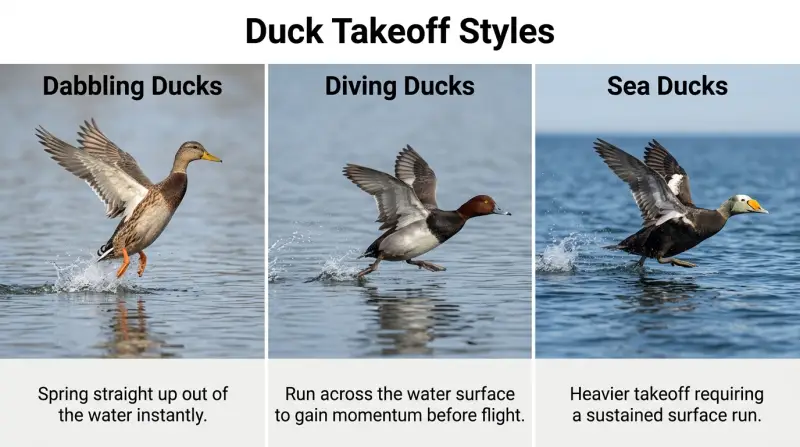
Michigan Duck Identification Chart
- Behavioral Splits: Waterfowl are primarily divided into dabbling ducks (which tip up to feed in shallow water and spring directly into flight) and diving ducks (which submerge completely and require a running takeoff across the water surface).
- Anatomical Markers: Bill shape, head crests, and speculum coloration on the secondary flight feathers provide permanent identification clues when seasonal plumage changes create ambiguity.
- Regional Distribution: Certain species like the Wood Duck favor inland wooded swamps, while sea ducks like Long-tailed Ducks and scoters concentrate heavily on the open, deep waters of the Great Lakes.
- Regulatory Compliance: Hunters must cross-reference field identifications with the Michigan Waterfowl Stamp Program guidelines and current hunting regulations to ensure accurate species harvest quotas.
- Eclipse Plumage: Adult males molt into a female-like eclipse plumage in late summer, requiring observers to look for bill color and structural body shape rather than bright head patterns.
- Habitat Context: Knowing whether a wetland is a shallow prairie-style pothole, a boreal beaver pond, or an open Great Lakes bay instantly narrows down the probable duck species present.
To successfully navigate the wide variety of waterfowl traversing the Great Lakes basin, observers must first understand how to categorize ducks based on their broad physical and ecological traits. The table below serves as a foundational reference chart, mapping out the core identification parameters, primary habitat preferences, and feeding strategies for the major groups of ducks encountered in Michigan.
| Duck Group | Feeding Method | Takeoff Style | Primary Michigan Habitat | Key Visual Clues | Common Species Examples |
|---|---|---|---|---|---|
| Dabbling Ducks | Tip up or dabble at the surface; rarely submerge completely. | Spring straight up out of the water instantly. | Shallow marshes, flooded timber, agricultural fields, quiet river backwaters. | Brightly colored speculum on wings; legs positioned near the center of the body for easy walking on land. | Mallard, Wood Duck, American Black Duck, Blue-winged Teal, Northern Pintail. |
| Diving Ducks | Dive completely underwater to forage for plants, mollusks, and fish. | Run across the water surface to gain momentum before flight. | Deep lakes, large rivers, open bays of the Great Lakes. | Lobed rear toe; legs set far back on the body; often lacking a bright wing speculum. | Canvasback, Redhead, Lesser Scaup, Ring-necked Duck, Common Goldeneye. |
| Sea Ducks | Dive deep in open marine or large inland lake waters for animal prey. | Heavier takeoff requiring a sustained surface run. | Open waters of Lakes Michigan, Huron, Superior, Erie, and Ontario. | Bulky bodies, heavy or specialized bills, often specialized plumage crests or striking patches. | Common Merganser, Hooded Merganser, Long-tailed Duck, White-winged Scoter. |
Understanding these high-level distinctions allows field observers to eliminate dozens of possibilities within seconds of spotting a flock. When a flock jumps vertically out of a shallow marsh slough, you immediately rule out diving ducks. Conversely, if a raft of ducks dives simultaneously beneath the choppy waters of Saginaw Bay, you can immediately focus your identification efforts on diving and sea duck profiles.
Anatomical Structure and Terminology
Accurate duck identification requires familiarity with specific avian anatomy. When field marks blur due to distance or poor light, structural cues remain reliable.
- Speculum: A vividly colored, iridescent patch on the secondary flight feathers of dabbling ducks. Its border color and shape are often diagnostic for separating similar females.
- Bill Morphology: The shape of the bill tells the story of the duck’s diet. Broad, flat bills (like Mallards) strain vegetation and invertebrates; narrow, serrated bills (like Mergansers) grip slippery fish; short, wedge-shaped bills (like Canvasbacks) dig up subterranean tubers.
- Head Crests and Profiles: Many species possess distinct tufts or crests, such as the prominent fan-like crest of the male Wood Duck or the bushy crest of the Hooded Merganser.
- Leg Placement: Dabblers have legs centered under their mass, allowing them to walk comfortably on mudflats. Divers have legs pushed toward the rear of the body, which aids underwater propulsion but makes them awkward and clumsy on land.
Comprehensive Michigan Duck Identification Comparison Matrix
To further refine field identification, the matrix below details distinct seasonal plumage indicators, bill characteristics, and primary Michigan distribution ranges for key species.
| Species | Category | Male Breeding Plumage / Key ID | Female / Eclipse Plumage | Bill & Structural Markers | Michigan Distribution & Season |
|---|---|---|---|---|---|
| Mallard | Dabbler | Iridescent green head, white neck ring, chestnut breast, yellow bill. | Mottled brown body, orange-and-black bill, purple-blue speculum. | Broad, flat bill designed for generalist dabbling. | Statewide year-round resident; massive migrant concentrations. |
| Wood Duck | Dabbler | Multicolored crest, red bill, red eyes, white/chestnut pattern. | Gray-brown head, white teardrop eye patch, subtle crest. | Short, high-arched bill adapted for acorn and mast consumption. | Statewide in wooded swamps, river bottoms, and beaver ponds. |
| American Black Duck | Dabbler | Dark sooty-brown body, pale contrasting grayish-white head. | Virtually identical to male; dark mottled plumage. | Yellowish-green bill with dark saddle markings. | Eastern boreal wetlands, northern beaver ponds, winter visitor. |
| Blue-winged Teal | Dabbler | Slate-gray head, white crescent eye patch, powdery blue wing patch. | Mottled brown, subtle face markings, blue-gray wing coverts. | Small, compact bill; very small overall body mass. | Early autumn/spring migrant; localized Michigan breeder. |
| Green-winged Teal | Dabbler | Chestnut head, emerald-green eye patch, vertical white shoulder stripe. | Mottled brown, small size, green wing speculum. | Tiny, delicate bill; smallest dabbler in the state. | Common migrant and localized winter resident in open springs. |
| Northern Pintail | Dabbler | Chocolate-brown head, white neck stripe, long central tail feathers. | Delicately penciled tan/brown, slender neck, pointed tail. | Slender, gray-blue bill; elongated, graceful silhouette. | Widespread spring and fall migrant across agricultural wetlands. |
| Canvasback | Diver | Rusty-red head, sloping profile, stark white body, black chest. | Pale brown head and neck, grayish-brown body. | Long, wedge-shaped black bill merging smoothly with forehead. | Great Lakes bays and major inland lakes during migration/winter. |
| Redhead | Diver | Coppery-red head, round steep forehead, gray body, black breast. | Brownish head and body, pale throat patch. | Short blue-gray bill with a distinct black tip. | Common migrant on large inland lakes and Saginaw Bay. |
| Ring-necked Duck | Diver | Black back, gray flanks, peaked rear crown, faint neck ring. | Rich brown with a prominent whitish facial blaze around bill base. | Dark gray bill encircled by a bold white ring and tip band. | Abundant on northern forest lakes and marshes during migration. |
| Lesser Scaup | Diver | Black head with purplish sheen, peaked rear head crown, gray back. | Dark brown body with a distinct white patch at bill base. | Small blue-gray bill with a fine black nail at the tip. | Very common on inland lakes and sheltered Great Lakes bays. |
| Greater Scaup | Diver | Greenish gloss, rounded bulky head lacking a rear peak. | Brownish body with white facial patch similar to lesser scaup. | Slightly wider blue-gray bill than lesser scaup. | Concentrates heavily on open, deep Great Lakes waters in winter. |
| Common Goldeneye | Sea Duck | Dark green head, round white facial spot between bill and eye, yellow eyes. | Chocolate-brown head, gray body, white collar band. | Short, stubby black bill; rapid whistling wingbeat in flight. | Winter resident on unfrozen rivers and Great Lakes shores. |
| Hooded Merganser | Sea Duck | Collapsible black-and-white fan crest, yellow eyes, dark flanks. | Cinnamon-brown shaggy crest, gray-brown body. | Slender, serrated needle bill for catching fish. | Wooded wetlands, rivers, and inland lakes across Michigan. |
| Common Merganser | Sea Duck | Clean white body, dark green head, blood-red slender bill. | Gray body with a ragged reddish-brown head crest. | Long, heavy, serrated red bill. | Large inland lakes and open Great Lakes waters year-round. |
| Long-tailed Duck | Sea Duck | Striking dark-and-white winter pattern, elongated needle tail feathers. | Mottled brownish-gray head and body, lacking long tail. | Short, dark bill with an orange or pink band in males. | Deep, open waters of Lakes Michigan, Huron, and Superior in winter. |
Dabbling Ducks of Michigan (Anatinae)
Dabbling ducks are the quintessential waterfowl of Michigan’s inland marshes, beaver flowages, and shallow agricultural wetlands. They feed by tipping forward—submerging their heads and necks while their tails point skyward—to harvest seeds, tubers, and aquatic insects within reach. Because they must escape predators instantly from small woodland pools, their wing loading is adapted for vertical takeoff.
The Mallard (Anas platyrhynchos)
As the most abundant duck in Michigan, the Mallard serves as the baseline comparison for all other waterfowl. Adult males feature an unmistakable iridescent bottle-green head, a narrow white neck ring, a chestnut-brown breast, and a bright yellow bill. Females and juveniles are mottled brown with orange-and-black mottled bills and a prominent purple-blue speculum bordered by white bars. Mallards occupy virtually every aquatic habitat type in the state, from urban park ponds to remote northern bogs.
The Wood Duck (Aix sponsa)
Widely considered one of the most stunning birds in North America, the male Wood Duck displays a multicolored crest, a sleek red bill, bright red eyes, and white-and-chestnut body patterns. Females possess a grayish-brown head with a distinct white teardrop patch surrounding the eye and a subtle crest. Wood Ducks are uniquely adapted to forested wetlands, frequently perching high in oak and maple trees and nesting in natural tree cavities or artificial boxes placed across Michigan’s river systems.
American Black Duck (Anas rubripes)
Often confused with a female Mallard, the American Black Duck is actually a distinct species heavily tied to Michigan’s eastern boreal-transition wetlands and northern beaver ponds. Both sexes look similar: a dark, heavily sooty-brown body with a contrasting pale grayish-white head and a violet-blue speculum lacking the bold white trailing edge seen on Mallards. Their bills are yellowish-green with dark markings.
Teal Species: Blue-winged and Green-winged
Michigan hosts two small dabbling duck species that exhibit incredible aerial agility:
- Blue-winged Teal (Anas discors): Early migrants through Michigan, males feature a slate-gray head with a bold white crescent in front of the eye and a powdery blue patch on the upper wing visible in flight.
- Green-winged Teal (Anas crecca): The smallest dabbling duck in the state. Males possess a chestnut head accented by an iridescent emerald-green eye patch and a vertical white stripe on the shoulder. Both species favor shallow, muddy edges rich in invertebrate life.
Northern Pintail (Anas acuta)
Recognizable by its exceptionally slender silhouette, long neck, and elongated central tail feathers (in adult males), the Northern Pintail is a graceful migrant across Michigan wetlands. Males feature a chocolate-brown head extending down a clean white neck stripe, while females are delicately penciled in tan and brown with a narrower, pointed tail.
Diving Ducks of Michigan (Aythyinae)
When transitioning from shallow marshes to the deeper waters of Michigan’s inland lakes and Great Lakes bays, the waterfowl community shifts entirely. Diving ducks are heavier-bodied, possess smaller wings relative to their weight, and must patter across the water’s surface to build momentum before achieving flight. Once airborne, their flight style is faster and more direct than that of dabblers, often characterized by rapid, shallow wingbeats.
Canvasback (Aythya valisineria) and Redhead (Aythya americana)
These two large diving ducks are frequently confused by novice observers. The Canvasback features a sloping profile where the forehead slopes into a long, wedge-shaped black bill, paired with a rusty-red head and a stark white body. The Redhead possesses a rounder, steeper forehead, a shorter blue-gray bill with a black tip, a bright coppery-red head, and a gray body.
Ring-necked Duck (Aythya collaris)
Despite its name, the faint chestnut ring around the lower neck of the male Ring-necked Duck is rarely visible in the field. Instead, focus on key diagnostic markers: a peaked rear crown, a dark black back contrasting with gray flanks, and a distinctive white ring encircling a dark gray bill, with a secondary white ring near the bill tip. Females are rich brown with a prominent whitish facial blaze around the base of the bill.
Scaup: Lesser and Greater
Distinguishing between Lesser Scaup and Greater Scaup (collectively known as “bluebills”) is one of the classic challenges of Michigan waterfowl identification.
- Lesser Scaup (Aythya affinis): The more common scaup across Michigan inland lakes. Males feature a subtly peaked head shape that forms a distinct point toward the rear of the crown, often showing a purplish sheen in bright sunlight.
- Greater Scaup (Aythya marila): Prefers the open waters of the Great Lakes. Males possess a rounder, bulkier head shape that lacks a rear peak, displaying a greenish gloss instead.
Sea Ducks and Mergansers (Merginae)
The open waters of Lake Michigan, Lake Huron, Lake Superior, and Lake Erie host an entirely specialized guild of waterfowl. Sea ducks and mergansers are built to withstand heavy wave action, icy temperatures, and deep-water foraging dives targeting fish, crustaceans, and mollusks.
Common Goldeneye (Bucephala clangula)
Named for their striking golden-yellow eyes, male Common Goldeneyes feature a dark, iridescent green head marked by a crisp, round white patch between the bill and the eye. Their wings produce a distinct whistling sound in flight, earning them the local moniker “whistler.” They are common winter residents on unfrozen stretches of Michigan rivers and lakes.
Mergansers: Hooded, Common, and Red-breasted
Mergansers are easily separated from other ducks by their long, narrow, serrated bills designed for catching slippery fish.
- Hooded Merganser (Lophodytes cucullatus): Features a striking, collapsible white-and-black crest that can be raised or lowered. Females display a cinnamon-brown crest.
- Common Merganser (Mergus merganser): Large-bodied with a clean white body, dark green head, and a bright red, slender bill.
- Red-breasted Merganser (Mergus serrator): Slightly smaller than the Common, sporting a ragged double crest on the back of the head and a mottled reddish-brown chest band on males.
Scoters and Long-tailed Ducks
During late fall and winter, dedicated birders scan the open Great Lakes for sea ducks. Black Scoters, White-winged Scoter, and Surf Scoters are bulky, dark-plumaged diving ducks equipped with heavily swollen, multicolored bills. The Long-tailed Duck (Clangula hyemalis) is a vocal, agile diver that winters in deep Great Lakes waters, featuring elongated central tail feathers and striking dark-and-white contrasting winter plumage.
Field Identification Strategy and Decision Framework
When encountering an unfamiliar flock of ducks in the field, working through a structured mental checklist prevents hasty misidentifications. Follow this step-by-step decision framework to narrow down your options:
- Evaluate Habitat Context: Is the bird in a shallow timber swamp, an agricultural flood zone, an inland lake, or bobbing on open Great Lakes swells? Match the habitat to the ecological group (dabbler vs. diver vs. sea duck).
- Observe Behavior: Are the ducks tipping up at the surface or plunging underwater? Do they spring directly upward into flight or run across the water?
- Check the Silhouette and Stance: Look at head shape (peaked, crested, smooth), bill proportions (broad vs. needle-thin), and tail length.
- Scan for Key Secondary Marks: Look for wing speculums in flight, eye color, neck rings, and facial patches. Do not rely solely on bright male breeding colors, as eclipse plumage can mask species distinctions.
- Cross-Reference Regional Guides: Consult local birding reports, state hunting regulations, and waterfowl identification guides to confirm rarity or seasonal timing.
Common Mistakes and Identification Pitfalls
Even experienced field ornithologists occasionally misidentify waterfowl due to a few common biological and environmental traps. Being aware of these pitfalls ensures greater accuracy.
- Relying Exclusively on Breeding Plumage: From late July through September, adult male ducks undergo a rapid molt into “eclipse plumage,” temporarily resembling females. Identifying these birds requires focusing on structural cues like bill shape and head profile rather than bright colors.
- Confusing Female Dabblers: Female Mallards, American Black Ducks, and Gadwalls share mottled brown patterns. Always check speculum color and bill markings rather than general body coloration.
- Distance and Lighting Distortion: Low-angle morning and evening sun can cast warm hues on gray or brown feathers, making a drab female diving duck appear deceptively reddish or colorful.
- Assuming Location Equals Permanence: While Wood Ducks are strongly tied to wooded swamps, unexpected species regularly drop into isolated wetlands during peak migration windows.
Frequently Asked Questions
The Mallard is universally considered the easiest duck to identify due to its high abundance, urban tolerance, and the male’s unmistakable green head and yellow bill. Even in eclipse plumage, their size and structural familiarity make them simple to recognize.
Observe their takeoff and feeding style. Dabbling ducks spring straight up out of the water into flight and tip up to feed without submerging. Diving ducks must run across the water surface to gain takeoff momentum and dive completely underwater in search of food.
While sea ducks like scoters and Long-tailed Ducks primarily inhabit the massive open waters of the Great Lakes (Lakes Michigan, Huron, Superior, and Erie), severe weather or migration pushes can occasionally ground them on large inland bodies of water like Houghton Lake or Lake Charlevoix.
During late summer and early autumn, male ducks go through an eclipse molt. They drop their primary flight feathers, becoming temporarily flightless, and grow drab, cryptic feathers that protect them from predators while they hide in dense vegetation.
Hunters and conservationists should carry their Michigan hunting license, state waterfowl stamp validation, and a reliable pocket identification guide such as the official U.S. Fish and Wildlife Service “Ducks at a Distance” manual to ensure compliance with species-specific bag limits.
Conclusion
Mastering duck identification across Michigan’s diverse aquatic ecosystems is a rewarding pursuit that blends ornithology, ecology, and outdoor stewardship. By systematically evaluating habitat context, behavioral traits, anatomical structures, and seasonal plumage variations, observers can move past the initial confusion of mixed flocks and confidently identify every species. Whether you are managing wetland habitats, observing spring migrations, or participating in the Michigan Waterfowl Stamp Program, sharp identification skills remain the bedrock of responsible wildlife appreciation and conservation.