
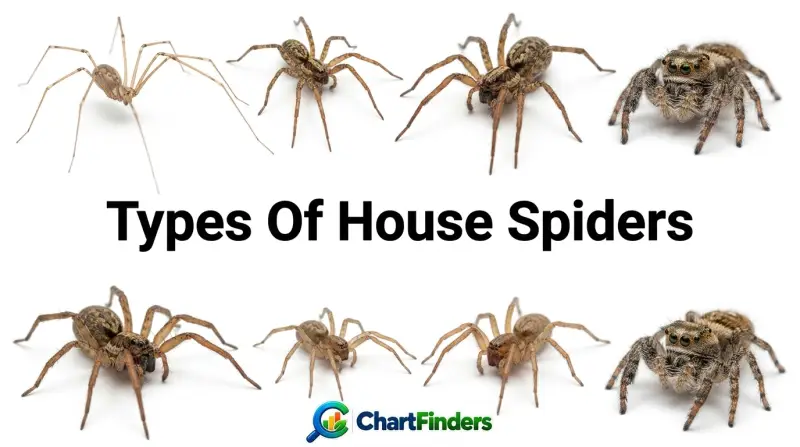
The human domicile is not a sterile environment; rather, it functions as a complex, climate-controlled ecosystem capable of supporting myriad invertebrate organisms. Among the most prevalent of these hidden lodgers are spiders (Order Araneae). While encountering an eight-legged arachnid scuttling across a baseboard frequently induces visceral alarm, the vast majority of house spiders are ecologically benign, highly specialized predators that suppress populations of subterranean pests, Dipteran vectors (flies), and blattid intruders (cockroaches). Understanding the taxonomy, anatomical morphology, web architecture, and behavioral patterns of common house spiders allows property occupants to transition from reactionary pest eradication to informed ecological coexistence.
This exhaustive treatise examines the biological classifications, physiological adaptations, and ecological roles of the most frequently encountered synanthropic spiders. By categorizing these organisms through rigorous scientific frameworks, building comparative diagnostic matrices, and dissecting common identification errors, this guide equips entomologists, pest management professionals, and curious naturalists with the comprehensive data required to accurately evaluate indoor arachnid fauna.
Types Of House Spiders
- Most indoor spiders are obligate synanthropes that rely on human structures for stable thermal ranges and moisture access, rarely surviving long if expelled outdoors.
- Cellar spiders (family Pholcidae) and American house spiders (family Theridiidae) dominate indoor environments, constructing irregular or tangled webs in undisturbed architectural corners.
- Funnel-web weavers (family Agelenidae) occupy low-lying perimeter zones, constructing dense, non-sticky sheet webs terminating in silken retreat tubes.
- Medically significant species, such as the brown recluse (Loxosceles reclusa) and certain false widows (Steatoda spp.), require careful morphological differentiation from harmless look-alikes.
- Spiders serve a vital ecological function by regulating urban pest populations, making indiscriminate chemical eradication both ecologically counterproductive and largely unnecessary.
To accurately parse the assemblage of arachnids found within residential and commercial structures, one must examine the distinct families, genera, and behavioral adaptations that define indoor spider ecology. The following taxonomic breakdown delineates the primary cohorts of house spiders encountered globally.
Cellar Spiders (Family Pholcidae)
Colloquially misidentified as “daddy long-legs” (a term also applied to harvestmen of the order Opiliones and crane flies of the family Tipulidae), cellar spiders are among the most ubiquitous inhabitants of human structures. The most common synanthropic species, Pholcus phalangoides, is easily recognized by its exceptionally delicate, thread-like legs and pear-shaped cephalothorax and abdomen. Pholcids construct irregular, chaotic, three-dimensional space webs in upper vertical corners, dark basements, and crawlspaces.
Cellar spiders possess a unique behavioral defense mechanism: when disturbed or threatened within their web, the spider oscillates or vibrates its entire body rapidly in a circular blur. This motion renders the arachnid visually indistinct to avian and mammalian predators. , Pholcids are voracious and opportunistic predators; they routinely invade the webs of other, more venomous spiders—such as widow spiders (Latrodectus spp.)—to dispatch and consume the resident host.
Common House Spiders and Cobweb Spiders (Family Theridiidae)
The family Theridiidae encompasses the comb-footed spiders, named for the comb-like row of serrated setae on their fourth tarsal segments used to pull silk from their spinnerets. The American house spider (Parasteatoda tepidariorum) and cupboard spiders (Steatoda spp.) are prime examples. These arachnids spin messy, tangled cobwebs in architectural junctions, window frames, and behind furniture.
Theridiids possess bulbous, spherical abdomens and relatively slender legs. Their webs consist of sticky vertical snare lines anchored to structural surfaces; when an insect contacts these lines, the tension pulls the thread loose, suspending the prey in mid-air. The spider then emerges from its silken retreat to wrap the immobilized victim in additional viscous silk bands before envenomating it.
Funnel-Web Weavers (Family Agelenidae)
Represented prominently by genera such as Tegenaria (including the giant house spider, Tegenaria domestica) and Agelenopsis, funnel-web weavers construct flat, horizontal sheet webs that terminate in a tubular retreat where the spider lies in wait. These webs are constructed of non-sticky silk; instead of relying on adhesive properties, the dense mesh traps the tarsal claws of running insects, impeding their escape long enough for the agelenid to launch a rapid ambush.
Agelenids are characterized by robust, hairy legs, elongated posterior spinnerets that protrude visibly from the rear of the abdomen, and linear markings on the dorsal carapace. While frequently found in basements, garages, and low wall voids, mature males abandon their webs during late summer and autumn to wander extensively in search of receptive females, leading to accidental human encounters.
Lace Weavers (Family Amaurobiidae)
Lace weavers, particularly members of the genus Amaurobius, are stocky, robust spiders featuring a large, glossy cephalothorax and a velvety, oval abdomen typically marked with a characteristic pale, splodge-like dorsal pattern. These spiders construct a distinctive sticky, white mesh web that incorporates a tubular retreat tucked neatly into masonry crevices, window sills, or door frames.
Amaurobiids utilize cribellate silk—a specialized, woolly, non-sticky silk teased out by a comb-like plate called the calamistrum. Adult males exhibit a thinner, lankier habitus and frequently wander during reproductive seasons, mirroring the behavior of wandering agelenids.
Jumping Spiders (Family Salticidae)
Unlike web-building architects, jumping spiders are active diurnal hunters that rely on exceptional spatial vision and explosive hydraulic leg extension to stalk and capture prey. Common indoor salticids include the bold jumping spider (Phidippus audax) and the zebra spider (Salticus scenicus). These spiders feature a compact body plan, a flat-fronted cephalothorax, and a distinct arrangement of eight eyes dominated by a massive, forward-facing pair of principal lenses that grant them acute stereoscopic color vision.
Salticids do not construct webs for hunting; instead, they spin small, silken nocturnal retreats (hibernacula) in secluded architectural angles and rely on a dragline of silk anchored behind them at all times as a safety tether during dynamic leaps.
Wolf Spiders (Family Lycosidae)
Wolf spiders are large, robust, ground-dwelling hunters that occasionally wander indoors through ground-level gaps, sliding doors, and foundation cracks. Characterized by mottled brown and grey cryptic coloration, a distinct arrangement of eye sizes (with a prominent row of four small lower eyes and two massive lateral/upper eyes), and heavy, spiny legs, lycosids do not build capture webs.
Instead, they actively pursue or ambush arthropod prey across floors and baseboards. Female wolf spiders exhibit a unique maternal investment strategy: after producing an egg sac, they attach it securely to their spinnerets and drag it behind them. Upon hatching, dozens of spiderlings climb onto the mother’s dorsal carapace, where they are transported for weeks until their first molt.
Comparative Analysis of Synanthropic Spider Taxa
To differentiate the physiological, behavioral, and architectural traits of the primary house spider families, the following matrix summarizes key diagnostic criteria. This structured overview facilitates rapid identification based on morphology and microhabitat preference.
| Family | Common Example | Primary Web Architecture | Morphological Characteristics | Hunting & Behavioral Strategy |
|---|---|---|---|---|
| Pholcidae | Cellar Spider (Pholcus phalangoides) | Irregular, three-dimensional space webs in elevated corners | Extremely long, thread-like legs; pale, elongated body | Vibrates rapidly when disturbed; preys on insects and other spiders |
| Theridiidae | American House Spider (Parasteatoda tepidariorum) | Tangled cobwebs with vertical sticky lines | Bulbous, spherical abdomen; slender legs; comb-like hind tarsus | Suspends prey via sticky lines; wraps victims in viscous silk |
| Agelenidae | Giant House Spider (Tegenaria domestica) | Horizontal sheet web terminating in a tubular retreat | Robust legs, elongated posterior spinnerets, mottled brown carapace | Rapid ambush hunter across non-sticky sheets; wandering males in autumn |
| Amaurobiidae | Lace Weaver (Amaurobius spp.) | Sticky white mesh web with a crevice retreat | Stocky, glossy head; velvety oval abdomen with pale dorsal markings | Uses cribellate (wooly) silk; nocturnal foragers and wandering males |
| Salticidae | Jumping Spider (Phidippus audax) | None (spins silken nocturnal resting cocoons) | Compact body, large forward-facing principal eyes, hairy/velvety | Active diurnal stalker; relies on stereoscopic vision and hydraulic leaps |
| Lycosidae | Wolf Spider (Lycosa spp.) | None (ground-dwelling roamer) | Heavy, spiny legs; mottled cryptic coloration; prominent eye arrangement | Active nocturnal/crepuscular ground hunter; carries egg sacs and young |
Analyzing this matrix reveals clear functional divisions within the indoor arachnid community. Web builders (Pholcidae, Theridiidae, Agelenidae, Amaurobiidae) anchor themselves to specific architectural microhabitats where prey naturally accumulates due to thermal drafts or structural convergence. Conversely, hunters (Salticidae, Lycosidae) maintain transient associations with structures, entering intentionally in pursuit of nutritional resources or seeking shelter from seasonal climatic shifts.
Anatomical Morphology and Sensory Adaptations
The survival of synanthropic spiders within human habitations depends upon specialized anatomical and sensory modifications. Unlike outdoor fauna exposed to extreme weather fluctuations, indoor species navigate an environment characterized by low humidity, artificial illumination, smooth vertical surfaces, and reduced natural prey density.
Cephalothorax and Appendages
The spider body is divided into two primary tagmata: the cephalothorax (prosoma) and the abdomen (opisthosoma), joined by a narrow waist called the pedicel. The cephalothorax houses the central nervous system, digestive glands, venom glands, and locomotor appendages. Attached to the prosoma are four pairs of walking legs, each comprising seven segments (coxa, trochanter, femur, patella, tibia, metatarsus, and tarsus).
In climbing synanthropes like jumping spiders and cellar spiders, the tarsal claws are supplemented by microscopic tufts of specialized setae known as scopulae. These adhesive hair pads allow spiders to traverse vertical glass, polished tile, and painted drywall with ease by exploiting van der Waals forces.
Ocular Systems and Chemoreception
Spiders typically possess eight simple eyes (ocelli), though variations exist across families (e.g., recluse spiders possess six eyes arranged in three dyads). The arrangement and relative size of these lenses provide vital diagnostic clues:
- Salticidae: Possess exceptional visual acuity, utilizing movable retinal tubes behind massive principal lenses to track prey and communicate through complex visual displays.
- Lycosidae: Rely on a wide-angle panoramic field of view generated by secondary eyes, combined with acute sensitivity to motion.
- Web-Builders (Pholcidae, Theridiidae): Exhibit poor visual acuity, depending almost exclusively on mechanoreception—detecting minute vibrational frequencies transmitted along the taut strands of their silk webs.
In addition to ocular input, spiders process chemical cues via modified cuticular hairs called sensilla, located primarily on their legs and pedipalps. These chemoreceptors allow the arachnid to taste chemical footprints left by potential mates or prey.
Medically Significant Synanthropic Spiders
While the overwhelming majority of house spiders are entirely harmless to humans—either possessing chelicerae too weak to puncture human dermal tissue or venom devoid of human-specific systemic toxicity—certain taxa demand rigorous differentiation due to their medical significance.
The Brown Recluse (Loxosceles reclusa) and Sicariidae
The brown recluse is a member of the family Sicariidae, identifiable by its uniform light-brown to tan coloration and a distinct, dark violin-shaped marking on the dorsal cephalothorax (with the neck of the violin pointing backward toward the abdomen). Unlike most spiders that possess eight eyes, Loxosceles species possess six eyes arranged in distinct pairs (dyads) forming a semicircle.
Recluse spiders naturally inhabit dark, undisturbed microhabitats—such as woodpiles and rock outcroppings outdoors—and basements, attics, wall voids, and infrequently worn clothing indoors. Their venom contains sphingomyelinase D, an enzyme capable of causing localized dermonecrotic lesions, tissue destruction, and, in rare systemic reactions (loxoscelism), hemolysis and renal complications. However, brown recluse bites are statistically rare; these spiders are non-aggressive and bite only when compressed directly against human skin.
False Widow Spiders (Genus Steatoda)
Often confused with true widows (Latrodectus spp.) due to their glossy, globose abdomens, false widows (such as Steatoda nobilis and Steatoda grossa) belong to the family Theridiidae. They construct tangled cobwebs in dark corners and sheds.
While false widow bites can cause localized pain, erythema, and mild systemic symptoms due to neurotoxic compounds (steatodism), their venom is significantly less potent than that of the black widow. They can be distinguished from Latrodectus by the absence of the characteristic bright red hourglass marking on the ventral abdomen, replaced instead by pale, crescent-shaped, or triangular dorsal patterns.
Ecological Value and Pest Suppression Mechanics
The presence of spiders within a residential structure provides a vital ecosystem service. Urban entomology research demonstrates that homes containing established populations of synanthropic spiders experience significantly lower densities of disease-vectoring and nuisance arthropods, including:
- Culicidae (Mosquitoes): Captured mid-flight or upon landing near window sills by web-building theridiids and pholcids.
- Blattodea (Cockroaches): Intercepted by large roaming hunters like wolf spiders and giant house spiders.
- Muscidae (House Flies): Ensnared in high-tension vertical cobwebs and sheet webs.
- Acarina (Dust Mites and Storage Mites): Suppressed by micro-spiders inhabiting carpeting and dark structural recesses.
Indiscriminate application of broad-spectrum synthetic insecticides to eradicate indoor spiders often proves counterproductive. Eliminating apex invertebrate predators can trigger population surges in secondary pest species that reproduce rapidly in the absence of biological checks.
Practical Management and Identification Framework
When architectural spider populations exceed acceptable aesthetic or psychological thresholds for property occupants, integrated pest management (IPM) protocols should supersede aggressive chemical extermination. The following diagnostic and mitigation framework ensures balanced structural control.
- Environmental Auditing: Inspect dark basements, utility penetrations, sub-floor crawlspaces, and window frames to identify the specific spider families present using morphological markers (leg length, web structure, eye arrangement).
- Moisture Abatement: Because synanthropic spiders require high humidity or accessible moisture sources, repair leaking plumbing, improve sub-grade ventilation, and deploy dehumidifiers to reduce ambient moisture.
- Structural Exclusion: Seal foundation cracks, install fine-mesh insect screens on all windows and exterior vents, and apply tight door sweeps to block wandering hunters (lycosids, agelenids) from entering living quarters.
- Sanitation and Mechanical Removal: Regularly vacuum web formations, egg sacs, and architectural corners using a high-efficiency particulate air (HEPA) vacuum attachment. This physically disrupts reproduction without introducing chemical toxicants into the indoor air matrix.
- Targeted Interventions: Reserve chemical acaricides or residual pyrethroid insecticides strictly for confirmed medically significant taxa (e.g., Loxosceles infestations) localized in confined structural voids.
Common Identification Mistakes and Diagnostic Limitations
Amateur naturalists and property owners frequently misidentify indoor arthropods due to morphological convergence or psychological panic. Recognizing common errors prevents misinformed reactions:
- Cellar Spiders vs. Harvestmen: Harvestmen (Opiliones) possess fused, oval bodies without a distinct waist (pedicel) and never spin silk or construct webs. Cellar spiders exhibit a clearly segmented body and construct complex silk snares.
- Wolf Spiders vs. Brown Recluse: Wolf spiders are large, hairy, fast-moving hunters lacking the violin cephalothorax marking and possessing eight distinct eyes. Confusing them frequently leads to unnecessary alarm regarding harmless roaming species.
- Male Spiders vs. Infestations: Discovering a large, long-legged spider wandering openly across a living room floor in late summer almost invariably indicates a wandering adult male searching for a mate, rather than an emerging indoor infestation. These individuals have short lifespans and pose zero ecological threat.
Frequently Asked Questions
Are house spiders dangerous to humans or household pets?
The vast majority of house spiders are entirely harmless. Their chelicerae are either too short to pierce human skin, or their venom is evolutionarily optimized exclusively for invertebrate prey and lacks mammalian toxicity. The sole exceptions in North America are the brown recluse and widow spiders, which possess medically significant venom but remain highly reclusive and defensive rather than aggressive.
Why do spiders suddenly appear inside homes in large numbers during autumn?
Many synanthropic spider species experience peak reproductive maturity late in the growing season. Adult males abandon their webs and structural retreats to actively wander in search of receptive females. Additionally, as ambient outdoor temperatures drop, cooling microclimates prompt mobile ground-dwelling species (such as wolf spiders and funnel-web weavers) to seek thermal insulation within structural gaps.
Should I remove spider webs from my home?
Removing inactive webs is primarily an aesthetic choice. However, leaving established, non-interfering cobwebs in hidden corners (such as unfinished basements or mechanical rooms) provides passive biological pest control by capturing nuisance insects before they enter primary living spaces. Regular removal is recommended primarily for high-traffic aesthetic zones or when medically significant species are suspected.
Do ultrasonic or electromagnetic plug-in repellents drive spiders away?
Controlled scientific evaluations of commercial ultrasonic and electromagnetic pest repellers consistently demonstrate that these devices exert negligible behavioral impact on arachnids. Spiders lack auditory organs tuned to high-frequency airborne sound waves; instead, their primary sensory input relies on physical substrate vibrations. Structural exclusion, cleanliness, and targeted moisture reduction remain the only reliable mitigation strategies.
How can I permanently prevent spiders from entering my living quarters?
Complete eradication of indoor spiders is neither ecologically feasible nor desirable due to their role in suppressing household pests. However, prevention focuses entirely on exclusion: sealing utility penetrations with silicone caulk, repairing damaged window screens, clearing dense vegetation or woodpiles away from exterior foundation walls, and reducing indoor relative humidity below 50% to deter moisture-loving invertebrates.
Conclusion
House spiders represent a specialized, highly successful guild of predatory arthropods perfectly integrated into human architectural ecosystems. While their morphology and sudden movements frequently provoke apprehension, a scientific examination reveals that taxa such as cellar spiders, comb-footed cobweb weavers, and active hunting spiders serve as invaluable, eco-friendly biological control agents. By understanding the distinct physiological traits, web architectures, and microhabitat preferences of these organisms, property occupants can accurately distinguish between harmless natural predators and medically significant species, fostering a balanced, informed approach to indoor pest management.