
The geographic landscape of Missouri, characterized by rich hardwood forests, overgrown brush, and humid river valleys, provides an ideal habitat for multiple vector-borne tick species. Outdoor enthusiasts, agricultural workers, and homeowners alike frequently encounter these arachnids from early spring through late autumn. However, not all ticks pose the same health risks, nor do they look alike at different stages of their life cycle. Understanding how to distinguish between species based on morphological markers—such as white dorsal spots, distinct scutum patterns, and relative mouthpart lengths—transforms a moment of panic into an opportunity for informed prevention.
(Reference: Ticks | Missouri Department of Conservation)This comprehensive guide serves as an authoritative reference manual for identifying the primary tick species found throughout Missouri. By exploring specific physical characteristics, life stages, preferred microhabitats, and associated disease risks, you can systematically evaluate any tick encounter. Whether you are performing a post-hike body check or examining an attached specimen, mastering these identification keys is your first line of defense against tick-borne illness.
Explore our detailed breakdown on Types Of Grasshoppers (Complete Field Identification).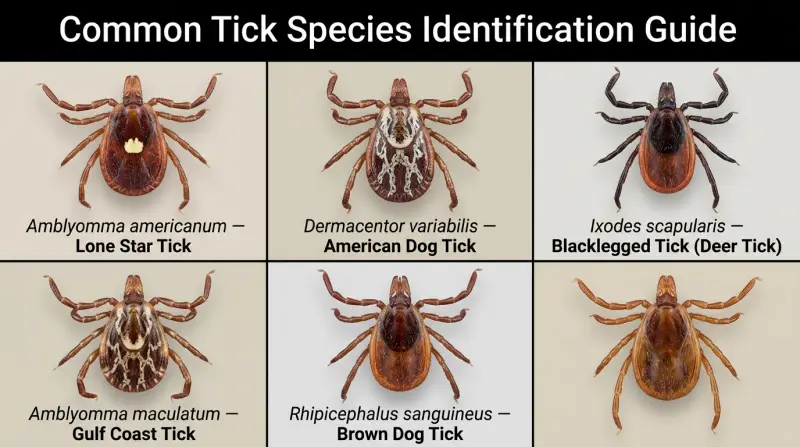
Missouri Tick Identification Chart
- The Big Three: The Lone Star tick, American Dog tick, and Blacklegged tick are the most medically significant and commonly encountered species in Missouri.
- Visual Markers: Adult females are generally easier to identify than nymphs or larvae due to distinct dorsal markings, such as the lone white spot on female Lone Star ticks.
- Life Stage Vulnerability: Nymphs—especially those of the Blacklegged tick—are roughly the size of a poppy seed and are responsible for a high percentage of human pathogen transmissions due to being overlooked.
- Pathogen Diversity: Missouri ticks do not just carry Lyme disease; they are also vectors for Ehrlichiosis, Tularemia, Heartland virus, Bourbon virus, and Alpha-gal syndrome (red meat allergy).
- Habitat Overlap: While Blacklegged ticks favor wooded understory and leaf litter, Lone Star and American Dog ticks frequently inhabit tall grasses, edge habitats, and overgrown trails.
- Proactive Protection: Effective deterrence requires utilizing EPA-registered repellents like permethrin on clothing and DEET on skin, alongside daily tick checks.
To accurately identify a tick specimen recovered in Missouri, you must compare its physical traits against standardized taxonomic criteria. The following identification chart breaks down the most critical diagnostic features of the state’s primary tick vectors, comparing adult females, adult males, and their primary disease associations.
| Species Name | Common Name | Female Identification Clues | Male Identification Clues | Primary Missouri Habitats | Key Pathogens & Health Risks |
|---|---|---|---|---|---|
| Amblyomma americanum | Lone Star Tick | Reddish-brown body with a distinct, single white/silver dot (spot) near the center of the back. Long mouthparts. | Reddish-brown body with scattered white or yellowish linear markings or streaks along the outer edge. No central spot. | Wooded areas with dense underbrush, brushy edges, shade, and areas frequented by white-tailed deer. | Ehrlichiosis, STARI, Heartland virus, Bourbon virus, Alpha-gal syndrome (meat allergy). |
| Dermacentor variabilis | American Dog Tick | Deep chestnut brown with a prominent, ornate silver-grayish shield (scutum) just behind the head. Medium mouthparts. | Similar to female, featuring extensive silver-gray ornate patterning across the entire upper body shield. | Open fields, tall grasses, clearings, walkways, and low-brush trails with minimal forest canopy. | Rocky Mountain spotted fever, Tularemia, canine tick paralysis. |
| Ixodes scapularis | Blacklegged Tick (Deer Tick) | Distinct reddish-orange abdomen contrasting sharply with a solid dark brown/black scutum and black legs. Long mouthparts. | Entirely dark brown to black body with no contrasting orange abdomen. Noticeably smaller than the female. | Deciduous forests, humid wooded pockets, leaf litter, and areas with high deer and small mammal populations. | Lyme disease, Anaplasmosis, Babesiosis, Powassan virus. |
| Amblyomma maculatum | Gulf Coast Tick | Reddish-brown with a distinct, ornate silvery-white pattern (reticulations) on the scutum. Very long mouthparts. | Similar silvery-white patterns on the back, covering a larger portion of the male’s dorsal surface. | Pastures, brushy fields, and coastal-like open grasslands migrating northward into Missouri pastures. | Rickettsia parkeri rickettsiosis (a milder form of spotted fever), canine hepatozoonosis. |
| Rhipicephalus sanguineus | Brown Dog Tick | Uniformly reddish-brown body with no distinctive ornamentation, elongated shape, and short hexagonal mouthparts. | Similar uniform reddish-brown body, slightly smaller, commonly found attached to indoor canine hosts. | Kennels, homes, barns, and structures where dogs are housed; rarely feeds on humans outdoors. | Canine Ehrlichiosis, canine Babesiosis, Rocky Mountain spotted fever (primarily in dogs). |
Reading this table requires looking closely at anatomical landmarks, particularly the scutum (the hard dorsal plate located immediately behind the head) and the relative length of the mouthparts (palps). For instance, long mouthparts extending well past the base of the head are typical of Amblyomma and Ixodes species, whereas short, blunt mouthparts are characteristic of Dermacentor and Rhipicephalus species.
Detailed Profiles of Major Missouri Ticks
To fully grasp tick identification in Missouri, one must examine each major species beyond a simple table. Each tick possesses unique behavioral traits, feeding preferences, and geographic distributions across the state that influence your exposure risk.
1. The Lone Star Tick (Amblyomma americanum)
The Lone Star tick is arguably the most aggressive and widely distributed tick in Missouri. Recognized instantly by the striking single white dot on the adult female’s back, this species does not hesitate to actively hunt for hosts. Both nymphs and adults will crawl toward human vibration and carbon dioxide emissions from several feet away.
- Aggressiveness: Unlike ticks that passively wait on vegetation, Lone Star ticks actively pursue hosts along forest floors and game trails.
- Unique Risk: Beyond transmitting Ehrlichiosis and Heartland virus, the saliva of the Lone Star tick contains alpha-gal sugars. When injected into a human host, this carbohydrate can trigger a delayed mammalian meat allergy, making victims violently allergic to beef, pork, lamb, and dairy products.
2. The American Dog Tick (Dermacentor variabilis)
Often referred to historically as the wood tick, the American Dog tick is a larger species heavily populated across Missouri’s grassy fields, parks, and hiking paths. Adult females feature an ornate, silver-gray shield behind the head.
- Host Preference: While adults readily attach to medium-to-large mammals—including dogs, coyotes, and humans—the immature larvae and nymphs typically feed on small rodents.
- Medical Significance: This species is the primary vector for Rocky Mountain spotted fever (RMSF) in Missouri, a bacterial infection characterized by a sudden high fever, headache, and a characteristic spotted rash that often begins on the wrists and ankles.
3. The Blacklegged Tick (Ixodes scapularis)
Commonly known as the deer tick, the Blacklegged tick is smaller than both the Lone Star and American Dog tick. Its population has expanded significantly throughout eastern and southern Missouri wooded regions.
- Life Cycle Risk: The adult female is easily spotted by her bright reddish-orange abdomen and black scutum. However, the tiny nymph stage—active in late spring and summer—is extremely difficult to detect, measuring roughly the size of a poppy seed.
- Pathogen Load: Ixodes scapularis is the exclusive vector for the bacteria causing Lyme disease, as well as co-infections like Anaplasmosis and Babesiosis. Because nymphs feed undetected for days, they account for the vast majority of human Lyme disease contractions.
4. Emerging and Regional Species in Missouri
While the “Big Three” account for the vast majority of bites, Missouri residents also encounter secondary species:
- Gulf Coast Tick (Amblyomma maculatum): Recognized by ornate silvery markings on its back and very long mouthparts, this tick has established reproducing populations in Missouri pastures and brushlands, transmitting Rickettsia parkeri.
- Brown Dog Tick (Rhipicephalus sanguineus): Uniquely adapted to indoor environments, kennels, and homes, this reddish-brown tick completes its entire life cycle indoors around domestic dogs and rarely targets humans unless household infestations are severe.
Life Stages and Identification Challenges
One of the most common pitfalls in tick identification is assuming all ticks look like the classic teardrop-shaped adults found in textbooks. Ticks go through four distinct life stages: egg, larva, nymph, and adult. Each stage presents unique identification hurdles.
Larvae (often called “seed ticks”) possess only six legs and are microscopic—often emerging in clusters of hundreds from hatched egg masses on the forest floor. When a human walks through a cluster, hundreds of seed ticks can attach simultaneously, causing severe localized irritation even if they are not yet vector-competent for certain diseases.
Nymphs possess eight legs like adults but are fractionally smaller. A nymphal Blacklegged tick is nearly translucent and roughly the size of a pinhead. Because feeding nymphs secrete a mild anesthetic cement into the skin, hosts rarely feel the bite, allowing the tick to engorge over 48 to 72 hours—the critical window required for pathogen transmission.
Tick-Borne Pathogens Prevalent in Missouri
Accurate tick identification directly informs medical diagnosis. Different tick species harbor distinct microbial agents. Knowing which tick bit you provides your healthcare provider with immediate diagnostic direction.
| Pathogen Type | Specific Disease | Primary Tick Vector | Common Early Symptoms |
|---|---|---|---|
| Bacterial | Lyme Disease | Blacklegged Tick (Ixodes scapularis) | Fever, fatigue, headache, and expanding “bull’s-eye” rash (erythema migrans). |
| Bacterial | Rocky Mountain Spotted Fever | American Dog Tick, Gulf Coast Tick | Sudden high fever, severe headache, muscle aches, and spotted rash starting on extremities. |
| Bacterial | Ehrlichiosis | Lone Star Tick (Amblyomma americanum) | Flu-like symptoms, fever, chills, fatigue, and muscle pain; rash is less common in adults. |
| Viral | Heartland Virus | Lone Star Tick (Amblyomma americanum) | Fever, fatigue, decreased appetite, headache, nausea, and low white blood cell counts. |
| Viral | Bourbon Virus | Lone Star Tick (Amblyomma americanum) | Fever, tiredness, rash, headache, body aches, and vomiting. |
| Protozoal | Babesiosis | Blacklegged Tick (Ixodes scapularis) | Often asymptomatic; can cause hemolytic anemia, fever, dark urine, and fatigue. |
Step-by-Step Tick Removal and Preservation Protocol
If you identify an attached tick on your skin or a family member, rapid and proper removal is essential. Improper techniques—such as burning with matches, squeezing the abdomen, or applying petroleum jelly—cause the tick to regurgitate gut contents into the bloodstream, increasing infection risk.
- Use Fine-Tipped Tweezers: Grasp the tick as close to the skin’s surface as possible, clamping directly around the tick’s mouthparts. Avoid gripping the swollen abdomen.
- Pull Straight Up: Pull firmly and steadily straight outward without twisting or jerking. Twisting can cause the mouthparts to break off and remain embedded in the skin.
- Inspect the Wound: If small mouthparts break off and remain in the skin, leave them alone; your body will usually expel them naturally over a few days. Clean the bite area thoroughly with rubbing alcohol, an iodine scrub, or soap and water.
- Dispose of the Tick: Submerge the live tick in rubbing alcohol, wrap it tightly in tape, or flush it down the toilet. Never crush a tick with your bare fingers.
- Save for Identification (Optional): Place the removed tick in a sealed plastic bag or small vial with a damp cotton ball if you wish to have a local agricultural extension office or medical professional verify the species.
Common Mistakes in Missouri Tick Identification
Mistakes in identifying and managing ticks can lead to delayed medical treatment or unnecessary panic. Being aware of these frequent missteps protects your health:
- Confusing Engorgement with a New Species: When any tick feeds for several days, its body swells dramatically, turning gray, plump, and balloon-like. An engorged American Dog tick can easily be mistaken for an entirely different exotic species if you only look at its swollen abdomen rather than its scutum and mouthparts.
- Assuming All Ticks Transmit Lyme Disease: Many Missouri residents panic about Lyme disease upon finding a Lone Star tick. Lone Star ticks do not transmit Lyme disease, though they vector other serious pathogens like Ehrlichiosis and Alpha-gal.
- Ignoring Nymphs: Focusing exclusively on large, visible adult ticks during self-checks while ignoring tiny nymphal stages allows disease-carrying micro-ticks to go unnoticed.
- Relying Solely on the “Bull’s-Eye” Rash: While classical erythema migrans indicates Lyme disease, many tick-borne diseases (such as Ehrlichiosis or Heartland virus) do not produce a distinctive rash, making clinical diagnosis reliant on patient exposure history and symptom onset.
Frequently Asked Questions
The Lone Star tick (Amblyomma americanum) is currently the most abundant and aggressively encountered tick species across Missouri woodlands, brushlands, and rural residential properties.
Yes, but primarily through the Blacklegged tick (Ixodes scapularis). While Lyme disease is well-documented in Missouri, it is less prevalent than in the Northeastern United States, and other tick-borne illnesses like Ehrlichiosis and Alpha-gal syndrome occur with higher frequency locally.
Dogs and cats are highly susceptible to American Dog ticks and Brown Dog ticks. Consult your veterinarian for year-round oral or topical systemic tick preventatives, and perform regular post-outdoor brush-downs on your pets.
Do not dig excessively into the skin with sharp needles, as this introduces secondary bacterial infection risks. Wash the area thoroughly with antiseptic, and let your body naturally shed the residual mouthpart fragment.
While adult Blacklegged ticks can be active on warm winter days above freezing, Missouri’s primary tick season spans from early spring (March) through late autumn (November), with nymphal activity peaking during the humid months of May, June, and July.
Conclusion
Mastering the Missouri Tick Identification Chart empowers you to navigate the outdoors safely and respond effectively to potential vector exposures. By recognizing the physical distinctions between the Lone Star tick, the American Dog tick, the Blacklegged tick, and secondary regional species, you can tailor your preventative measures and communicate precise details to medical professionals if symptoms arise. Maintain vigilant daily tick checks, utilize EPA-registered repellents, and treat outdoor excursions with informed, proactive caution.