
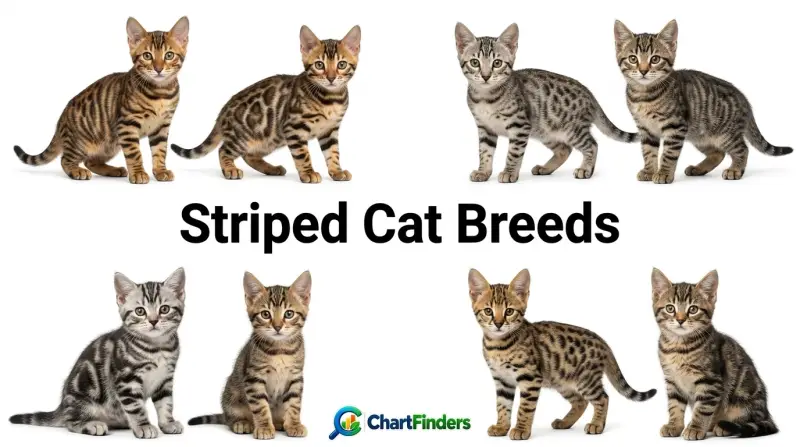
The allure of the striped cat has captivated human imagination for centuries. Whether peering out from a sunlit window or curled up on a sofa, the striped feline carries a wild aesthetic that links our modern living rooms directly to the ancient African wildcat, Felis lybica. Yet, when people search for “striped cat breeds,” they are often surprised to learn that a stripe is not a genetic breed specification, but rather a coat pattern—technically known as a tabby pattern—that appears across dozens of distinct feline breeds.
Understanding these cats requires looking past popular misconceptions and examining the underlying genetics, breed-specific physical traits, and distinct coat variations. From the gentle, oversized frame of the Maine Coon to the muscular agility of the American Shorthair and the ticked, wild-looking coat of the Abyssinian, striped cats populate nearly every corner of the feline world. This guide explores the biology of feline stripes, examines the specific breeds renowned for these coats, breaks down coat subtypes, and provides practical insight into caring for these extraordinary companions.
Striped Cat Breeds and Genetic Foundations
- Striped cats are defined by coat patterns (tabby) rather than a single specific breed, appearing in dozens of purebred and mixed-breed lines.
- All tabby cats feature an agouti hair shaft (alternating dark and light bands) and a distinct “M” marking on their foreheads.
- Major breeds celebrated for striped or patterned coats include the American Shorthair, Maine Coon, Abyssinian, and Bengal.
- Tabby patterns generally divide into four core subtypes: mackerel, classic, spotted, and ticked.
- Proper grooming, balanced nutrition, and mental stimulation are essential for maintaining the health and vivid contrast of a striped cat’s coat.
To understand striped cat breeds, one must first understand that “tabby” is a coat pattern, not a genetic breed. Just as human hair can be curly or straight regardless of ethnicity or nationality, cat coats can be solid, colorpoint, tortoiseshell, or striped (tabby), regardless of whether the cat is an American Shorthair, a Maine Coon, or a domestic shorthair rescue.
The striped appearance is governed by the agouti gene. In a non-agouti cat, every hair is solid black or pigmented throughout. In an agouti cat, individual hairs feature bands of pigment alternating between dark eumelanin and lighter yellowish-brown pheomelanin. This creates the optical illusion of stripes or agouti ticking. , every true striped cat displays a distinct “M” shape on its forehead, a trait so deeply embedded in feline folklore that both Christian and Islamic traditions have attributed mythical origins to the marking.
| Breed Name | Primary Size / Weight | Common Tabby Subtype | Temperament Profile | Best Suited For |
|---|---|---|---|---|
| American Shorthair | Medium to Large (8–15 lbs) | Classic & Mackerel | Easygoing, adaptable, affectionate | Families, multi-pet homes, first-time owners |
| Maine Coon | Large to Giant (10–25+ lbs) | Classic & Mackerel | Gentle giant, highly social, dog-like | Active families, spacious homes, interactive owners |
| Abyssinian | Medium (8–12 lbs) | Ticked Tabby | Inquisitive, highly active, playful | Active households, owners wanting an interactive pet |
| Bengal | Medium to Large (8–15 lbs) | Spotted / Marbled (Modified Tabby) | Energetic, athletic, vocal | Experienced cat owners, active environments |
The table above highlights that while these breeds all share the genetic capacity for striped or patterned coats, their physical structures and temperaments diverge significantly. Choosing the right striped cat requires looking beyond the aesthetics of the coat to match the breed’s energy level and social needs with your lifestyle.
Decoding Tabby Coat Subtypes
Within the broad category of striped cats, felinologists categorize patterns into four distinct subtypes based on how the agouti hairs arrange themselves across the body:
- Mackerel Tabby: The most common striped pattern, featuring narrow, vertical, parallel stripes that run down the cat’s sides, resembling the skeleton of a fish (hence “mackerel”). These cats also typically feature unbroken spine lines and ringed tails and legs.
- Classic Tabby (Blotched): Characterized by bold, swirling patterns on the flanks that often resemble a bullseye or butterfly wing. Classic tabbies have thicker bands and a prominent “butterfly” marking across their shoulders.
- Spotted Tabby: Instead of continuous lines, the stripes are broken up into spots or rosettes distributed evenly across the torso. Breeds like the Egyptian Mau and certain Bengal lines showcase this variation.
- Ticked Tabby: Also known as the Abyssinian or agouti pattern, these cats do not have traditional body stripes. Instead, individual hairs feature multiple bands of light and dark pigment, giving the coat a shimmering, salt-and-pepper or warm ruddy glow, though residual striping may still appear on the legs and face.
Prominent Breeds Known for Striped Coats
While any domestic cat can inherit a striped coat, several recognized pedigree breeds are universally celebrated for producing reliable, striking tabby patterns. These breeds have been selectively bred for generations not only for their temperaments and body types but also for the clarity and contrast of their coats.
The American Shorthair: The Quintessential Working Cat
The American Shorthair is perhaps the most iconic representative of the classic striped cat. Originally brought to North America by early European settlers to protect ships and homesteads from rodents, these cats developed robust, muscular bodies, dense coats, and calm, resilient dispositions.
While American Shorthairs come in dozens of colors and patterns, the silver classic tabby—featuring jet-black markings over a brilliant, shimmering silver background—is the visual standard most people picture. Their easygoing nature makes them exceptionally adaptable. They enjoy human companionship, get along well with respectful dogs, and possess a moderate activity level that fits comfortably into both quiet apartments and bustling family households.
The Maine Coon: The Gentle Giant with Wild Stripes
As one of the largest domesticated cat breeds, the Maine Coon combines an imposing physical presence with a famously sweet temperament. Native to the harsh winters of New England, these cats developed heavy, water-repellent double coats, tufted paws, and bushy tails designed to withstand sub-zero temperatures.
Maine Coons frequently display classic and mackerel tabby patterns, often in brown, silver, or red. Their heavy coats amplify the contrast of their stripes, giving them a distinctly wild, forest-dwelling appearance. Despite their size—with males frequently exceeding 20 pounds—Maine Coons are renowned for their gentle, playful, and dog-like personalities, often following their owners from room to room and greeting them at the door.
The Abyssinian: The Ticked Beauty
The Abyssinian represents a unique twist on the striped cat concept. Rather than sporting distinct vertical stripes or bold bullseyes, Abyssinians possess a ticked tabby coat where every individual hair shaft is banded with multiple shades of dark and light pigment.
This unique coat gives the Abyssinian a warm, shimmering appearance reminiscent of a wild rabbit or African wildcat. While their bodies lack prominent stripes, a careful examination reveals residual striping on their legs, tail rings, and the classic “M” on their forehead. Abyssinians are exceptionally intelligent, highly energetic, and acrobatic, making them a favorite for owners who want an interactive, dog-like feline companion.
The Bengal: Bringing Wild Patterns Indoors
Developed through the hybridization of the Asian Leopard Cat (Prionailurus bengalensis) and domestic felines, the Bengal is famous for its exotic appearance. While technically displaying modified tabby patterns, Bengals feature vivid spots, rosettes, and marbled stripes that mimic wild jungle cats.
A Bengal’s coat often exhibits “glitter”—a unique genetic trait where individual hair tips reflect light, making the coat appear as though it has been dusted with gold or pearl. Beyond their striking aesthetics, Bengals are high-energy, exceptionally athletic cats that require ample mental stimulation, interactive play, and vertical climbing space to thrive.
Genetics, Color Variations, and Coat Maintenance
Maintaining the striking appearance of a striped cat requires an understanding of how genetics influence coat color and how proper care preserves coat health. The base color of a striped cat is determined by melanin production, which can be modified by dilution genes that turn dense black stripes into soft gray (blue tabby) or rich brown stripes into warm cinnamon or fawn.
, sex-linked genetics play a fascinating role in red (orange) tabbies. The gene responsible for red pigmentation is carried on the X chromosome. Because male cats possess only one X chromosome (XY), they need only one copy of the red gene to be fully orange. Female cats, possessing two X chromosomes (XX), require two copies of the red gene to be completely orange; otherwise, they result in tortoiseshell or calico patterns with patches of tabby striping.
Nutritional and Grooming Requirements for Striped Coats
A cat’s coat is the direct reflection of its internal health. To keep a striped cat’s coat vibrant, glossy, and free of dullness, owners must focus on three core maintenance pillars:
- High-Quality Protein & Omega Fatty Acids: Feline hair is composed almost entirely of keratin, a protein. Diets rich in animal protein, supplemented with Omega-3 and Omega-6 fatty acids (found in fish oil or specialized cat foods), prevent hair brittleness and enhance the deep contrast between dark stripes and light agouti backgrounds.
- Regular Brushing Routines: Even shorthair breeds like American Shorthairs benefit from weekly brushing to remove dead undercoat hairs and distribute natural sebum oils. Longhaired striped breeds, such as Maine Coons, require daily or near-daily grooming to prevent painful matting, particularly in areas where friction occurs, such as behind the ears and under the armpits.
- Hydration and Skin Health: Adequate water intake supports skin elasticity and prevents dry flaking, which can cause tabby coats to appear ashy or muted. Incorporating wet food into the daily diet ensures optimal hydration.
Common Myths and Misconceptions About Striped Cats
Because striped cats are so ubiquitous, numerous myths and misconceptions persist regarding their behaviors, genetics, and origins.
Myth 1: All striped cats are male.
As discussed earlier, while red (orange) tabby cats are statistically more likely to be male due to sex-linked genetics, standard brown, silver, and gray tabby patterns appear with equal frequency across both males and females.
Myth 2: Tabby is a distinct breed.
Many owners mistakenly believe “Tabby” is an official breed recognized by registries like the Cat Fanciers’ Association (CFA). In reality, tabby is a coat phenotype that spans dozens of distinct breeds and millions of non-pedigreed domestic rescue cats.
Myth 3: Striped cats have wilder temperaments.
While hybrids like Bengals retain high energy levels, standard domestic striped cats do not possess inherently wilder temperaments than solid-colored cats. Feline personality is primarily shaped by socialization during kittenhood, genetics, and individual upbringing rather than coat color or striping patterns.
Frequently Asked Questions
Are all striped cats considered tabbies?
Yes. In the feline world, any cat exhibiting stripes, swirls, spots, or ticked hairs belongs to the tabby classification. All true tabbies share the characteristic agouti hair banding and the distinctive “M” marking on their forehead.
What is the friendliest striped cat breed?
While individual temperament varies, the Maine Coon and the American Shorthair are widely regarded as two of the friendliest and most adaptable striped cat breeds. Both are known for affectionate, easygoing personalities that integrate smoothly into family life.
Why do tabby cats have an “M” on their forehead?
Genetically, the “M” marking is a result of evolutionary pigment distribution around the brow. Culturally and historically, various legends surround the marking, including Christian folklore suggesting the Virgin Mary marked a stable cat that comforted the infant Jesus, and Islamic tradition claiming the Prophet Muhammad’s favorite cat, Muezza, wore the sign.
Do striped cat coats change color as they age?
Yes, many striped kittens experience coat changes as they mature into adulthood. Silver tabbies may develop higher contrast as their undercoats whiten, and brown tabbies can experience shifts in warmth and undertone due to seasonal shedding, sunlight exposure, and age-related melanin production changes.
How can I tell the difference between a mackerel tabby and a classic tabby?
The easiest way to distinguish between the two is by examining the torso pattern. Mackerel tabbies feature narrow, vertical, parallel stripes resembling fish bones. Classic tabbies display bold, swirling, bullseye-like patterns or butterfly shapes across their flanks.
Conclusion
Striped cats represent a fascinating intersection of evolutionary history, genetic diversity, and aesthetic beauty. Whether you are drawn to the rugged charm of the Maine Coon, the athletic grace of the American Shorthair, or the exotic look of the Bengal and Abyssinian, striped felines offer something for every cat lover. By understanding their genetic backgrounds, coat variations, and specific care needs, owners can ensure their striped companions live healthy, vibrant lives while celebrating the timeless wild heritage encoded in their coats.