
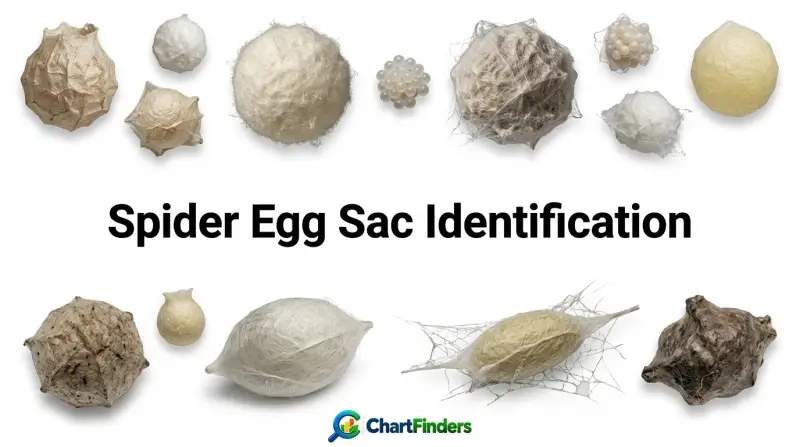
Encountering a hidden cluster of silken spheres in a basement corner, beneath a rotting deck plank, or dangling in the center of an orb weaver’s web instantly prompts a mix of curiosity and caution. For property owners, pest control technicians, and amateur naturalists alike, recognizing what is hatching nearby depends on accurate morphological interpretation. Because female spiders invest substantial metabolic energy into protecting their progeny, the architecture of an egg sac is often as taxonomically distinct as the physical morphology of the adult spider itself.
Distinguishing a harmless garden spider’s cocoon from the secluded nursery of a medically significant species prevents both unnecessary ecological disruption and potential medical risk. This comprehensive reference guide provides field identification criteria, morphological breakdowns across major spider families, structural comparisons, lifecycle dynamics, practical handling protocols, and safety standards based on observational entomology and arachnological research.
Spider Egg Sac Identification Chart
- Silk Architecture: Sac textures range from papery and parchment-like to fluffy, loosely woven cotton, or tough, waterproof outer layers.
- Species Specificity: Families such as Araneidae, Pholcidae, and Salticidae produce highly recognizable sacs that reflect their hunting and nesting strategies.
- Environmental Placement: Location matters: web-bound sacs differ fundamentally from those hidden under stones, bark, or structural timbers.
- Color Variation: Most sacs are white, cream, or off-yellow initially, often weathering to gray, brown, or dirty tan as they age through seasonal changes.
- Egg Counts: Brood sizes range widely from fewer than 10 eggs in specialized hunters to over 1,000 in large orb-weavers.
- Safety Protocols: Never crush suspected medically significant sacs indoors; proper containment and disposal prevent accidental dispersion of hundreds of spiderlings.
To accurately identify a silken egg cluster, field observers must examine multiple structural dimensions simultaneously. The following reference chart details the primary morphological markers, typical habitats, and egg capacities across the most frequently encountered spider families in North America and temperate regions.
| Spider Family / Genus | Common Name | Sac Shape & Structure | Color & Texture | Typical Placement | Approx. Egg Count |
|---|---|---|---|---|---|
| Araneidae (Argiope spp.) | Garden / Orb-weaver Spiders | Large, round, flask-, or pear-shaped; thick papery outer wall with fluffy core. | Brownish-tan, parchment-like exterior. | Suspended in tall grass, shrubs, or structural corners near webs. | 400 – 1,000+ |
| Pholcidae (Pholcus phalangioides) | Cellar Spiders (Daddy Longlegs) | Loose, spherical cluster of silk loosely binding eggs together with minimal outer casing. | Translucent white to pale green, very thin. | Carried by female in her chelicerae or hung lightly in corner webs. | 15 – 50 |
| Theridiidae (Latrodectus spp.) | Widow Spiders (Black/Brown Widow) | Spherical to pear-shaped with distinct surface bumps or smooth parchment walls (depending on species). | Tan, cream, or brownish; paper-bag texture. | Tucked inside dark, protected retreats, under logs, or porch boxes. | 200 – 400 |
| Sicariidae (Loxosceles reclusa) | Brown Recluse | Small, flattened, disk- or lens-shaped; papery envelope enclosing eggs. | Off-white to yellowish-tan. | Hidden beneath cardboard, stored items, baseboards, or dark crevices. | 30 – 50 |
| Salticidae | Jumping Spiders | Oval, flattened, tightly woven silk “cribs” or retreat cells. | Bright white, dense, papery silk. | Inside tight silken cocoons under tree bark, rocks, or window sills. | 50 – 200 |
| Lycosidae | Wolf Spiders | Spherical, durable, bluish-gray or brownish ball with a visible central seam. | Teal-tinted gray, brown, or olive; tough, papery silk. | Attached firmly to the female’s spinnerets; carried constantly. | 100 – 300+ |
Understanding these baseline characteristics provides an analytical framework for field identification. However, because spider reproduction is closely tied to seasonal microclimates and maternal behaviors, examining specific family traits in greater detail is essential for accurate diagnosis.
Detailed Morphological Breakdown by Spider Family
Different evolutionary pressures dictate how spiders construct and safeguard their eggs. While wandering hunters rely on mobility and camouflage, stationary web-builders must engineer weatherproof architectural shells that endure environmental extremes over winter or variable spring weather.
Araneidae (Orb-Weavers)
Orb-weavers construct some of the largest and most conspicuous egg sacs in the natural world. Genus Argiope (such as the yellow garden spider) produces large, vase- or teardrop-shaped structures anchored securely to sturdy plant stems or architectural overhangs. The outer layer consists of tough, brown, waterproof silk designed to withstand freezing winter temperatures and torrential rain. Inside this protective envelope lies a spongy core of golden silk wool that cushions hundreds of developing embryos. These sacs are typically laid in late summer or autumn; the adult female perishes with the first hard frost, leaving the generation-in-waiting safely insulated until spring emergence.
Pholcidae (Cellar Spiders)
Cellar spiders exhibit minimal investment in exterior architectural casing. Instead of anchoring a heavy cocoon to a substrate, a female cellar spider spins a very sparse, loose web of silk that barely holds her eggs together in a spherical cluster. Uniquely, she carries this fragile bundle everywhere in her mouthparts (chelicerae). If disturbed, she shakes her entire body in her web to blur her outline or flees while maintaining a firm grip on the egg cluster. Once the spiderlings hatch, they disperse rapidly into the surrounding superstructure of the building.
Theridiidae (Cobweb Weavers & Widow Spiders)
Cobweb weavers produce spherical or flask-shaped sacs whose texture varies markedly among genera. Black widow sacs (Latrodectus) are notoriously robust, measuring roughly half an inch in diameter, and feature a papery, tough exterior that can be smooth or textured with distinct spiky projections (as seen in the brown widow). These sacs are suspended within the tangled, three-dimensional retreat of the female’s web. Because a single female can produce multiple sacs over a summer, discovering one frequently indicates that a population is established nearby.
Sicariidae (Recluse Spiders)
Brown recluse and related recluses construct small, whitish to yellowish, lens-shaped or flattened disk sacs. Measuring typically less than a centimeter across, these delicate enclosures are tucked away in subterranean or indoor microhabitats where disturbance is minimal—such as inside cardboard storage boxes, behind stored lumber, or deep within wall voids. The female deposits a modest batch of thirty to fifty eggs, seals the papery envelope, and often remains nearby guarding the site until emergence.
Lycosidae (Wolf Spiders)
Wolf spiders represent a pinnacle of active maternal investment. Rather than anchoring their egg sacs to vegetation or structures, female wolf spiders spin a sturdy, spherical, bluish-gray or brownish silk sac and attach it directly to their spinnerets at the rear of their abdomen. The female hauls this heavy egg ball everywhere she hunts, basking in the sun to provide optimal thermal regulation for the developing embryos. When the spiderlings finally hatch, they chew their way out of the silk casing and immediately swarm onto the mother’s dorsal abdomen, riding on her back for the first week of life.
Comparative Egg Sac Dimensions and Clutch Metrics
To assist with precise identification when visual inspection alone is ambiguous, the following table outlines quantitative metrics regarding size, average clutch range, maternal attendance strategy, and overwintering capacity across major groups.
| Family / Group | Average Sac Diameter / Length | Clutch Range (Min–Max) | Maternal Attendance | Overwintering Strategy |
|---|---|---|---|---|
| Araneidae (Orb-Weavers) | 20 mm – 40 mm | 300 – 1,000+ | None (Female dies in autumn) | Encased in waterproof silk; survives freezing temps. |
| Theridiidae (Widows) | 10 mm – 15 mm | 150 – 400 | Guarded in retreat or periodic checking | Sheltered in protected indoor/outdoor wall voids. |
| Lycosidae (Wolf Spiders) | 12 mm – 18 mm | 100 – 300+ | Constant attachment to spinnerets | Varies; protected in subterranean burrows or leaf litter. |
| Sicariidae (Recluses) | 6 mm – 9 mm | 30 – 50 | Guarded nearby in dark retreat | Indoor stable climate or sheltered structural voids. |
| Salticidae (Jumping Spiders) | 8 mm – 14 mm | 50 – 200 | Guarded inside silken retreat cell | Insulated within tight silken hibernation cells. |
Environmental Factors and Seasonal Timing
Locating an egg sac in nature or within a domestic environment is heavily influenced by temporal and ecological variables. Most temperate zone spiders synchronize their reproductive cycles with photoperiod and temperature cues.
- Late Summer and Autumn Deposition: The vast majority of garden-dwelling and outdoor species mate in August and September. Sacs found swaying in ornamental grasses during October are almost universally overwintering orb-weaver or sac spider broods.
- Year-Round Indoor Reproduction: Species adapted to human habitations—such as cellar spiders, domestic house spiders (Tegenaria/Eratigena), and occasionally brown recluses—breed continuously if ambient indoor temperatures and food supplies remain stable. Consequently, indoor egg sacs appear across all four seasons.
- Microclimate Selection: Females actively seek out micro-environments that buffer temperature swings and shield against direct moisture saturation. Bark fissures, hollow logs, mulch beds, and structural joists provide optimal thermal mass.
Distinguishing Spider Egg Sacs from Insect Look-Alikes
A common diagnostic error involves confusing spider egg masses with the pupal cases, cocoons, or egg masses of various insects. Misidentifying these structures can lead to misplaced concern or ineffective pest management.
| Structure Type | Origin Organism | Visual & Tactile Characteristics | Common Locations |
|---|---|---|---|
| Spider Egg Sac | Arachnids | Silken, papery, fluffy, or tough spherical/disk structures; contains distinct round eggs or emerging spiderlings. | Web corners, vegetation, under stones, dark indoor voids. |
| Moth Cocoon | Lepidoptera (Insects) | Tough silk mixed with larval hairs or chewed plant fiber; elongated, spindle-shaped. | Tree trunks, eaves, sheltered outdoor corners. |
| Mantis Ootheca | Mantodea (Praying Mantises) | Frothy, hardened proteinaceous foam resembling dried papier-mâché or hardened sponge. | Twigs, stems, exterior walls, patio furniture. |
| Stink Bug / Moth Egg Cluster | Hemiptera / Lepidoptera | Geometric arrays of tiny, barrel-shaped or spherical individual eggs glued directly to a leaf surface. | Undersides of foliage, garden crops. |
Examining the texture under magnification immediately resolves ambiguity. While insect eggs and pupae rely on hardened chitin, cellular secretions, or chewed cellulose, true spider structures are composed entirely of diverse silk proteins extruded from abdominal spinnerets, often possessing a distinct elastic or papery tensile quality.
Safe Removal and Management Protocols
When discovering egg sacs in residential areas, determining whether removal is necessary depends on the species and location. Harmless outdoor orb-weavers provide natural pest control and should ideally be left undisturbed to complete their life cycle. Conversely, finding medically significant species in high-traffic living areas warrants controlled intervention.
- Assessment and Identification: Confirm whether the sac belongs to a hazardous species (such as widow or recluse spiders) or a benign garden inhabitant.
- Mechanical Removal: For indoor sacs, use a vacuum cleaner with a disposable bag attachment to suck up the sac and any attending adults. Alternatively, use a stiff broom to dislodge the sac directly into a sealed plastic bag or container containing soapy water or rubbing alcohol.
- Sanitation: Clear away excessive clutter, cardboard boxes, and firewood piles where wandering spiders prefer to anchor their nurseries.
- Sealing Entry Points: Caulk exterior cracks, install fine mesh window screens, and seal door sweeps to prevent gravid females from entering living quarters.
Avoid crushing fragile sacs against walls or floors by hand, as this can instantly release dozens of mobile, microscopic spiderlings into the immediate environment before containment is achieved.
Frequently Asked Questions
How can you tell if spider eggs inside a sac are alive or already hatched?
Old, hatched egg sacs typically appear deflated, papery, and feature a visible ragged tear or opening where the spiderlings emerged. Unhatched, viable sacs feel firm and springy to a gentle touch. Under careful magnification, developing embryos or tiny, dormant spiderlings can sometimes be observed silhouetted through translucent silk walls.
Do all mother spiders guard their egg sacs?
No, maternal care varies widely across families. Wolf spiders and cellar spiders actively carry or guard their broods. However, many orb-weavers, grass spiders, and sac spiders abandon their cocoons immediately after finishing construction, relying entirely on the physical durability of the silk and protective placement to ensure survival over winter.
How many spiderlings typically emerge from a single egg sac?
Brood size depends heavily on species biology and environmental conditions. Small spiders like cellar spiders may produce only 15 to 30 young per sac, while larger orb-weavers and wolf spiders routinely hatch between 100 and well over 1,000 spiderlings from a single maternal investment.
Are indoor spider egg sacs dangerous?
Most indoor egg sacs belong to harmless species such as cellar spiders, common house spiders, or jumping spiders, which pose zero medical threat to humans. The primary exceptions are widows (Latrodectus) and brown recluses (Loxosceles), whose egg sacs should be handled with protective gloves and promptly disposed of in sealed containers.
Can you spray spider egg sacs with standard household pesticides?
Standard liquid contact insecticides and aerosol sprays are largely ineffective against spider egg sacs. The dense, waterproof layers of silk protein act as a chemical barrier that protects the developing embryos inside. Physical removal via vacuuming, scraping into soapy water, or crushing in a sealed bag is significantly more reliable than chemical treatment.
Conclusion
Recognizing and interpreting spider egg sacs requires looking beyond simple color variations to examine architectural form, silk texture, and environmental context. Whether evaluating the large, papery cocoons of garden orb-weavers swaying in autumn shrubs or identifying the hidden, disk-shaped nurseries of recluses indoors, observational accuracy dictates appropriate management. By understanding the biological diversity and behavioral traits of these silken structures, observers can properly balance ecological appreciation with effective domestic safety.