
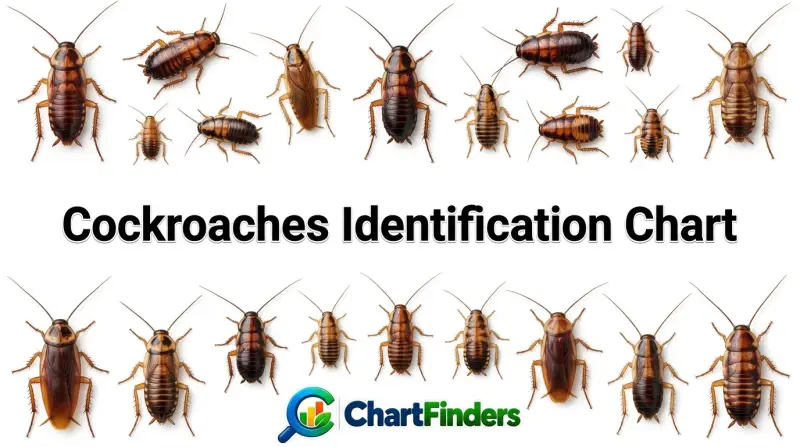
Cockroaches are among the most resilient and adaptable pests on Earth, capable of surviving in varied environments from tropical canopies to subterranean urban sewer systems. When these insects breach human habitations, they transition from environmental scavengers into significant household pests and vectors of disease. Successfully managing a cockroach problem relies entirely on proper identification. Treating an infestation without knowing the exact species often leads to wasted time, incorrect pesticide application, and continued population growth.
The confusion surrounding cockroach identification typically stems from their overlapping physical traits, secretive nocturnal habits, and the sheer number of distinct species worldwide—numbering in the thousands, though only a small fraction are common indoor pests. Understanding the biology, morphology, and behavioral patterns of the primary domestic species allows homeowners and pest management professionals to locate nesting sites, disrupt breeding cycles, and deploy appropriate control methods. This guide examines the major types of cockroaches, their defining characteristics, their preferred habitats, and the practical approaches needed to manage them effectively.
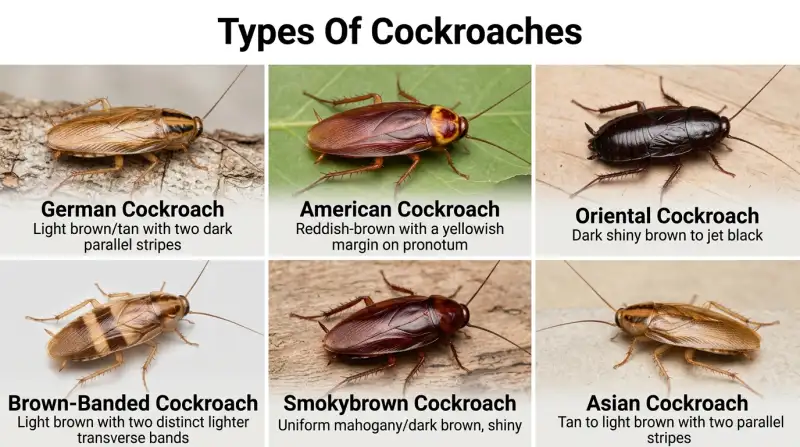
Types Of Cockroaches
- Species identification dictates control strategy; treatments that work for German roaches often fail against American or Oriental roaches.
- German cockroaches are the most common indoor pest worldwide, identifiable by two dark parallel stripes on their pronotum and a preference for kitchens and bathrooms.
- American cockroaches are the largest common household species, frequently misidentified as “water bugs,” and thrive in warm, damp subterranean areas.
- Oriental cockroaches are dark, glossy, and slow-moving, preferring cool, damp spaces like crawlspaces, basements, and floor drains.
- Brown-banded cockroaches require less moisture than German roaches and prefer warm, elevated locations such as upper cabinet corners, electronics, and furniture.
- Outdoor-oriented species like Cuban and Cinereous (lobster) cockroaches rarely infest indoor structures unless accidentally introduced or attracted by exterior lighting.
| Species Name | Average Adult Size | Color / Markings | Primary Habitat | Flight Capability |
|---|---|---|---|---|
| German Cockroach | 0.5 to 0.6 inches | Light brown/tan with two dark parallel stripes | Kitchens, bathrooms, warm moist areas | Cannot fly (glides when disturbed) |
| American Cockroach | 1.5 to 2.0 inches | Reddish-brown with a yellowish margin on pronotum | Basements, sewers, steam tunnels, boiler rooms | Can fly poorly in warm weather |
| Oriental Cockroach | 1.0 to 1.25 inches | Dark shiny brown to jet black | Damp basements, crawlspaces, floor drains | Wingless (males have short wings, cannot fly) |
| Brown-Banded Cockroach | 0.4 to 0.5 inches | Light brown with two distinct lighter transverse bands | Dry areas, upper walls, electronics, furniture | Males fly; females have short wings and do not fly |
| Smokybrown Cockroach | 1.25 to 1.5 inches | Uniform mahogany/dark brown, shiny | Attics, gutters, rotting wood outdoors, damp crawlspaces | Strong fliers, attracted to lights |
| Asian Cockroach | 0.5 inches | Tan to light brown with two parallel stripes | Outdoors in leaf litter, shaded lawns | Strong fliers, highly attracted to indoor lights |
The table above summarizes the core physiological and ecological traits of the most frequently encountered cockroach species. Analyzing these attributes helps clarify why certain species are found near food preparation counters while others inhabit damp floor drains or upper-wall crevices.
The German Cockroach (Blattella germanica)
The German cockroach is the most prevalent indoor cockroach species across the globe. Small, highly prolific, and exceptionally well-adapted to living alongside humans, this species is rarely found living outdoors in temperate climates. Adult German cockroaches measure roughly half an inch to 0.6 inches in length. They are light brown to tan, distinguished primarily by two dark, nearly parallel stripes running lengthwise down the pronotum (the shield-like segment right behind the head).
These insects thrive in warm, humid microclimates with ready access to moisture and food sources. Because of this, kitchens and bathrooms represent their primary strongholds. They wedge their flattened bodies into narrow cracks and crevices near dishwashers, refrigerators, stoves, and pantry shelving. German cockroaches have a rapid developmental cycle; a single female can produce multiple egg cases (oothecae) containing up to 40 eggs each during her lifetime, carrying the capsule until just before the nymphs hatch. This reproductive efficiency enables small populations to explode into severe infestations within weeks if left unchecked.
The American Cockroach (Periplaneta americana)
Often referred to incorrectly as the “water bug” or “palmetto bug,” the American cockroach is the largest of the common house-infesting species. Adults typically reach lengths between 1.5 and 2 inches. Their coloration ranges from reddish-brown to a deep mahogany, featuring a distinct yellowish band or halo pattern on the pronotum.
Unlike German cockroaches, American cockroaches frequently live outdoors in warm climates, inhabiting flower beds, mulch, hollow trees, and sewers. In colder regions, they seek shelter inside large commercial buildings, basements, steam tunnels, and boiler rooms. They require significant moisture and organic decay to thrive. While they can run rapidly, adults are capable of clumsy, short-distance flight when ambient temperatures are high. Their large size and intimidating appearance often cause significant alarm when they emerge from floor drains or crawlspaces into residential living areas.
The Oriental Cockroach (Blatta orientalis)
The Oriental cockroach, sometimes called the “black beetle” due to its dark, glossy exoskeleton, is easily distinguished from its reddish or tan counterparts. Adults grow to about one inch to 1.25 inches long. Females are broad-bodied with very short, vestigial wings and cannot fly. Males possess wings that cover about three-quarters of their abdomens, but they are likewise flightless.
This species has a distinct preference for cool, damp, and dark environments. Oriental cockroaches are frequently found in damp basements, crawlspaces, hollow block walls, beneath porches, and around floor drains or sewer pipes. They feed primarily on decaying organic matter, refuse, and starchy materials. Because they prefer cooler temperatures, they occasionally migrate indoors during extreme summer heatwaves or freezing winter spells, often entering through ground-level thresholds or utility penetrations.
The Brown-Banded Cockroach (Supella longipalpa)
Measuring roughly 0.4 to 0.5 inches long, the brown-banded cockroach is comparable in size to the German cockroach but exhibits very different behavioral and physical traits. They are light brown to gold, featuring two lighter, yellowish-brown bands running horizontally across their wings and abdomens—one across the base and another across the middle.
Unlike German cockroaches, which crowd around moisture sources in kitchens, brown-banded cockroaches prefer warm, dry environments. They do not require high humidity and can be found distributed throughout a home, including living rooms, bedrooms, and offices. They frequently deposit their egg cases on the underside of furniture, inside electrical appliances, behind picture frames, and near the ceiling line in upper wall corners. Males are strong fliers and are readily attracted to indoor lighting, while females have shortened wings and remain relatively sedentary.
Secondary and Regional Cockroach Species
Beyond the primary four domestic species, several other cockroaches occasionally infiltrate structures or inhabit specific regional ecosystems:
- Smokybrown Cockroach (Periplaneta fuliginosa): Large, uniform mahogany-brown insects with a high-gloss finish. They thrive in warm, humid southern climates, living outdoors in tree holes, woodpiles, and roof gutters, but frequently wander indoors or inhabit dark, damp attics.
- Asian Cockroach (Blattella asahinai): Visually nearly identical to the German cockroach, the Asian cockroach lives outdoors in shaded turf and leaf litter. Unlike German roaches, they are strong fliers and are aggressively drawn to television screens and bright interior lights at night.
- Cuban Cockroach (Panchlora nivea): Bright pale green in color, these tropical roaches live outdoors in dense vegetation and are drawn to porch lights. They rarely infest buildings and cannot survive dry indoor conditions.
- Cinereous / Lobster Cockroach (Nauphoeta cinerea): Reddish-brown with burrowing habits and strong digging capabilities, commonly kept as reptile feeder insects but occasionally establishing populations in agricultural or commercial settings.
Anatomy of a Cockroach Infestation: Biology and Behavior
To successfully control any cockroach species, one must understand their biological drives: harborage selection, feeding habits, and reproduction. Cockroaches are thigmotactic, meaning they prefer physical contact on all sides of their bodies. This explains why they wedge themselves tightly behind baseboards, inside narrow gaps under cabinets, and within cardboard corrugation.
Their mouthparts are designed for chewing a vast array of organic substances. While they prefer starchy foods, sweets, and grease, they will readily consume paper, glue, leather, book bindings, hair, and decaying organic waste when preferred resources are scarce. This omnivorous diet makes them exceptionally difficult to starve out.
Reproductive strategies vary among species, but all cockroaches undergo hemimetabolous metamorphosis—meaning they pass through three distinct life stages: egg, nymph, and adult. The absence of a pupal stage allows nymphs to emerge and immediately begin foraging alongside adults. The protective egg case, or ootheca, shields developing embryos from environmental hazards and many standard surface-level contact insecticides, making targeted egg-stage disruption or residual growth regulation essential for long-term control.
Health Risks and Allergens Associated with Cockroaches
Cockroaches are not merely repulsive nuisance pests; they present documented public health risks. As they travel from unsanitary locations—such as sewers, garbage bins, and decaying organic refuse—to food preparation surfaces and eating utensils, they mechanically transfer human pathogens on their bodies and spines.
Documented microbial vectors carried by cockroaches include various species of bacteria (such as Salmonella, Staphylococcus, and Streptococcus), human-pathogenic fungi, parasitic worms, and viral particles. More pervasive than direct pathogen transmission, however, is the allergic burden they impose.
Cockroach saliva, cast skins (exuviae), fecal matter, and decomposing body parts contain potent airborne allergens. When disturbed, these microscopic particles become airborne and are inhaled by building occupants. In urban environments and multi-family housing complexes, chronic exposure to cockroach allergens is a major contributing factor to the onset and exacerbation of allergic rhinitis and pediatric asthma.
Identification and Inspection Methodology
Accurate identification begins with a thorough inspection of the premises. Because cockroaches are strictly nocturnal, seeing them out during daylight hours usually indicates a heavy infestation where harborage sites are overcrowded, forcing individuals out into the open.
Inspectors look for secondary physical evidence when live insects are hidden:
- Fecal Droppings: German cockroach feces resemble dark coffee grounds or black pepper specks deposited along runways and corners. Larger species, such as American and Oriental roaches, leave cylindrical, blunt-ended droppings that can be mistaken for mouse droppings.
- Smear Marks: In areas with high moisture, cockroaches leave dark, irregular smear marks where they travel or rest.
- Oothecae (Egg Cases): Empty or intact egg capsules glued to surfaces or hidden in cracks provide definitive clues regarding which species is present.
- Cast Skins: Nymphs shed their exoskeletons multiple times before reaching adulthood, leaving translucent papery skins behind in harborage zones.
- Odors: Severe infestations produce a characteristic, oily, musty odor generated by aggregation pheromones and defensive secretions.
Comparative Analysis of Control Strategies
Applying a blanket pesticide treatment across an entire home often fails because different cockroach species occupy completely distinct environmental niches. The table below outlines how control priorities shift based on species-specific biology.
| Species Target | Primary Harborage Focus | Primary Attractant | Effective Treatment Approach |
|---|---|---|---|
| German Cockroach | Kitchens, bathrooms, motor housings of appliances, cracks near sinks | Moisture, warmth, grease, crumbs, food residue | Gel baits, insect growth regulators (IGRs), crack-and-crevice dusting, strict sanitation |
| American Cockroach | Basements, floor drains, utility vaults, subfloor crawlspaces | High humidity, standing water, decaying organic matter | Drain maintenance, perimeter exclusion, residual liquid insecticides, de-humidification |
| Oriental Cockroach | Damp crawlspaces, weeping walls, perimeter mulch beds, sump pits | Cool temperatures, pooling water, ground-level entry points | Moisture reduction, sealing foundation gaps, exterior granular baits |
| Brown-Banded Cockroach | Upper wall voids, electronics, furniture undersides, closets | Dry heat, elevated positions, varied organic debris | Dusts in wall voids, targeted bait placements in upper rooms, inspecting second-hand items |
Common Mistakes in Cockroach Identification and Management
Mistakes in species identification and treatment execution frequently prolong infestations and waste financial resources. Avoiding these common pitfalls ensures more rapid remediation:
- Treating All Roaches Alike: Relying solely on surface sprays meant for German roaches will yield poor results against Oriental roaches living in damp subterranean drains or brown-banded roaches nesting inside living room electronics.
- Over-Reliance on Aerosol “Foggers”: Total-release aerosol bombs (bug bombs) push cockroaches deeper into wall voids and inaccessible harborages rather than killing them, while contaminating exposed household surfaces with unnecessary pesticide residues.
- Neglecting Moisture Control: Insecticides alone cannot control species like American and Oriental cockroaches if structural moisture problems, plumbing leaks, and unsealed damp crawlspaces remain unaddressed.
- Relying exclusively on DIY sprays without incorporating insect growth regulators (IGRs) or high-performance professional baits allows resilient nymph populations to survive and mature.
Frequently Asked Questions
How can I tell the difference between a German cockroach and an Asian cockroach?
Visually, German and Asian cockroaches are nearly identical, both featuring a tan body with two dark parallel stripes on the pronotum. However, their behavior and habitat differ fundamentally. German cockroaches cannot fly, remain indoors, and infest kitchens. Asian cockroaches are strong fliers, live outdoors in turfgrass and leaf litter, and are strongly attracted to indoor lights at night.
Why do I see cockroaches during the day if they are nocturnal?
Seeing adult cockroaches during daylight hours is a reliable indicator of a heavy, established population. When harborage sites become overcrowded and competition for food and space intensifies, subordinate or excess individuals are forced out into the open during daylight.
Are large brown cockroaches found in basements dangerous?
Large brown cockroaches found in basements are typically American or Smokybrown cockroaches. While they do not sting, they carry bacteria and produce allergens that can trigger asthma and allergic reactions. They generally enter homes from exterior drainage systems, crawlspaces, or utility lines looking for moisture.
What is the fastest way to get rid of German cockroaches?
The most effective eradication protocol involves a combination of exhaustive sanitation (removing all competing food and water sources), vacuuming up live insects and egg cases, applying professional-grade insecticidal baits in cracks and crevices, and utilizing insect growth regulators (IGRs) to disrupt reproduction.
Do oriental cockroaches bite humans?
Oriental cockroaches rarely bite humans. Their mouthparts are designed for chewing dead and decaying organic matter. While physical contact with humans is possible, they prefer to run away and hide when disturbed rather than attack.
Conclusion
Identifying the specific type of cockroach infesting a living or working space is the foundational step toward achieving lasting control. Because species such as the German, American, Oriental, and brown-banded cockroach exhibit sharply contrasting behavioral patterns, moisture dependencies, and harborage preferences, a generalized treatment approach rarely succeeds. By pairing careful visual inspection and accurate species identification with targeted sanitation, moisture remediation, and professional baiting strategies, property owners can effectively manage populations and maintain a sanitary, pest-free environment.