
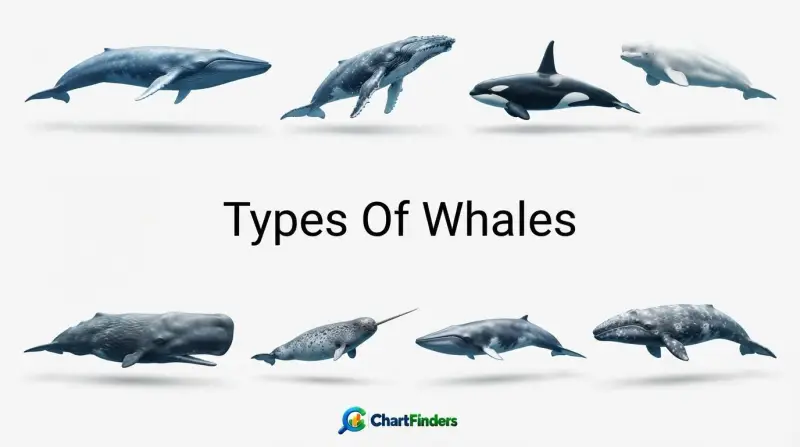
The vast expanse of the world’s oceans conceals a staggering diversity of marine mammals that have captured human imagination for centuries. From the gargantuan blue whale—the largest animal ever known to have lived on Earth—to agile, social dolphins and complex-diving beaked whales, these creatures represent one of the most remarkable evolutionary transitions in natural history, moving from land-dwelling mammals back into the aquatic tens of millions of years ago.
Understanding the different types of whales requires moving beyond colloquial names and looking at biological taxonomy, physical morphology, and behavioral adaptations. Whether examining the solitary habits of deep-diving apex predators or the epic migrations of massive filter-feeders, each species occupies a specialized ecological role. This article provides a comprehensive exploration of the biological divisions, specific families, behavioral traits, conservation statuses, and human-wildlife interactions that define the world of whales today.
The Fundamental Biological Division: Types Of Whales
- Whales are split into two suborders: Baleen whales (Mysticeti) and Toothed whales (Odontoceti).
- Baleen whales possess keratin plates for filter-feeding and generally feature two blowholes, whereas toothed whales have a single blowhole and rely on echolocation.
- Taxonomically, all dolphins and porpoises are technically toothed whales, belonging to the suborder Odontoceti.
- Human pressures, including commercial whaling, ocean noise pollution, and ship strikes, continue to threaten multiple whale species.
- Recent conservation milestones include documented births of critically endangered North Atlantic right whale calves (such as #1515 “Ghost” off Florida), though acoustic habitat degradation and vessel strikes remain persistent dangers.
To properly categorize any whale, marine biologists start by dividing the cetacean order (Cetacea) into two distinct suborders. This division is not merely about size or shape; it represents a fundamental divergence in feeding strategy, sensory perception, internal anatomy, and evolutionary lineage that occurred tens of millions of years ago.
| Trait / Feature | Baleen Whales (Mysticeti) | Toothed Whales (Odontoceti) |
|---|---|---|
| Feeding Apparatus | Keratin baleen plates | Conical or specialized teeth |
| Blowhole Count | Two distinct blowholes | Single blowhole |
| Echolocation | Absent or largely undocumented | Highly developed using a melon |
| General Size | Generally massive (medium to enormous) | Varies from small dolphins to the giant sperm whale |
| Social Structure | Often solitary or loose, temporary aggregations | Complex, stable pods with matriarchal structures (in many species) |
| Primary Diet | Krill, copepods, small schooling fish | Fish, squid, marine mammals, crustaceans |
The table above outlines the core physiological and behavioral splits between the two groups. Understanding these structural divergences allows us to explore each suborder, its respective families, and specific species in granular detail.
Baleen Whales (Suborder: Mysticeti)
Mysticetes, commonly known as baleen whales, are characterized by the presence of baleen plates instead of teeth. Composed of keratin—the same fibrous structural protein found in human fingernails, hair, and animal hooves—these fringed plates hang in rows from the upper jaw. When feeding, mysticetes take in massive volumes of ocean water containing swarms of tiny prey, then force the water out through the baleen plates, trapping krill, copepods, or small schooling fish inside to be swallowed.
This suborder contains four distinct families and roughly 15 recognized species. Because they do not need to hunt individual prey, most baleen whales target lower trophic levels, consuming immense biomass to fuel their massive bodies.
The Rorquals (Family: Balaenopteridae)
Rorquals represent the largest family of baleen whales, distinguished by ventral pleats (grooves) running from the lower jaw down to the navel. These throat grooves expand dramatically like an accordion when the whale engulfs water during lunge-feeding. This family includes:
- Blue Whale (Balaenoptera musculus): The largest animal on Earth, reaching lengths of up to 100 feet and weights exceeding 150 tons. They feed almost exclusively on krill, filtering several tons daily.
- Fin Whale (Balaenoptera physalus): The second-largest animal alive, known for its asymmetric coloration (dark on the left, white on the right side of the lower jaw) and incredible swimming speeds, earning it the moniker “greyhound of the sea.”
- Humpback Whale (Megaptera novaeangliae): Renowned for acrobatic breaching behaviors, complex vocalizations (“whale songs”), and cooperative bubble-net feeding strategies. Humpbacks are frequently observed traveling in groups (such as pods targeted in marine eco-tourism hotspots from Tonga to French Polynesia) and are a primary focus of marine research.
- Sei Whale (Balaenoptera borealis), Bryde’s Whale (Balaenoptera brydei), and Minke Whales (Common and Antarctic): Sleek, fast-swimming open-ocean inhabitants that rely on lunge-feeding and surface skimming.
Right Whales and Bowheads (Family: Balaenidae)
Unlike rorquals, right whales and bowhead whales lack ventral pleats and a dorsal fin. They have massive, arched jaws designed to house exceptionally long baleen plates, which allow for continuous skim-feeding at or near the water’s surface.
- North Atlantic Right Whale (Eubalaena glacialis): Critically endangered, numbering only around 360 individuals. They are severely threatened by commercial shipping lanes, ocean noise, and fixed commercial fishing gear entanglement. Recent conservation updates highlight seasonal births, such as right whale #1515 “Ghost” and her calf documented by volunteers and researchers off Flagler Beach, Florida, offering fragile hope for population recovery amidst ongoing anthropogenic pressures.
- North Pacific Right Whale (Eubalaena japonica) & Southern Right Whale (Eubalaena australis): Similar in morphology to their North Atlantic counterpart, historically hunted to near-extinction due to their slow speed and high blubber content (which made them float when killed—historically considered the “right” whales to hunt).
- Bowhead Whale (Balaenoptera mysticetus): Permanent residents of cold Arctic waters, possessing the thickest blubber of any whale (up to 20 inches) and a specialized skull capable of breaking through thick sea ice to breathe.
The Pygmy Right Whale (Family: Neobalaenidae)
Represented by a single living species (Caperea marginata), the pygmy right whale is the smallest of the baleen whales, growing to lengths of roughly 20 feet. Rarely seen alive, it possesses a slight dorsal fin and distinct anatomical traits, such as broad ribs, linking it closer to ancient fossil mysticetes than modern right whales.
The Gray Whale (Family: Eschrichtiidae)
The gray whale (Eschrichtius robustus) is the sole member of its family. It is a bottom-feeder, diving to the seafloor, rolling onto its side, and scooping up sediment to filter out benthic amphipods and worms. Gray whales undertake one of the longest annual migrations of any mammal, traveling roughly 10,000 to 12,000 round-trip miles between Arctic feeding grounds and shallow breeding lagoons in Baja California, Mexico.
Toothed Whales (Suborder: Odontoceti)
Odontocetes encompass all cetaceans that possess teeth rather than baleen. This suborder is far more diverse than Mysticeti, containing dozens of species ranging from massive apex predators to small, highly social river dolphins. A defining characteristic of toothed whales is their sophisticated biosonar system, or echolocation. By generating high-frequency clicks in their nasal passages and focusing them through a fatty organ in the forehead called the melon, they can navigate, detect obstacles, and hunt elusive prey in pitch-black water.
The Sperm Whale (Family: Physeteridae)
The sperm whale (Physeter macrocephalus) is the largest toothed whale on Earth, with adult males reaching up to 52 feet. Easily identified by its massive, square head—which contains the spermaceti organ used for buoyancy control and sound focusing—it dives to extreme depths (often over 3,000 feet) to hunt giant and colossal squid. Sperm whales live in stable matriarchal social groups.
Pygmy and Dwarf Sperm Whales (Family: Kogiidae)
Smaller relatives of the sperm whale, reaching only 9 to 11 feet in length, these elusive creatures inhabit deep offshore tropical and temperate waters. When threatened, they can release a dark, reddish-brown intestinal fluid similar to an octopus’s ink to confuse predators.
Beaked Whales (Family: Ziphiidae)
Beaked whales are among the least understood mammals on Earth. Comprising over 22 recognized species—such as Cuvier’s beaked whale and Baird’s beaked whale—they spend the vast majority of their lives in deep oceanic trenches, surfacing rarely. Cuvier’s beaked whales hold the mammalian record for breath-holding, with dives lasting nearly four hours and reaching depths exceeding 9,800 feet.
Oceanic Dolphins and Orcas (Family: Delphinidae)
Taxonomically, all dolphins, pilot whales, and orcas are toothed whales. While colloquially separated from “whales” in everyday conversation, several large delphinids retain “whale” in their common names due to their massive size:
- Killer Whale / Orca (Orcinus orca): The largest of the dolphins and an apex predator found in all the world’s oceans. Orcas hunt in coordinated pods, utilizing specialized hunting cultures passed down through generations to target fish, sharks, seals, and other whales.
- Pilot Whales (Long-finned and Short-finned): Highly social, robust oceanic dolphins known for strong familial bonds and tragic mass-stranding events.
- Melon-headed Whale, Pygmy Killer Whale, and False Killer Whale: Large oceanic delphinids that share morphological similarities with both killer whales and pilot whales.
Porpoises (Family: Phocoenidae)
Though structurally distinct from oceanic dolphins—possessing spade-shaped teeth, blunt snouts rather than elongated beaks, and triangular dorsal fins—porpoises belong to the toothed whale suborder.
River Dolphins (Superfamily: Platanistoidea)
Inhabiting river systems in South America and Asia (such as the Amazon river dolphin or boto), these specialized toothed whales have adapted to shallow, murky freshwater environments, often possessing unfused cervical vertebrae that allow them to turn their heads 90 degrees to navigate flooded forests.
Ecological Roles and Foraging Strategies
The evolutionary divergence between baleen and toothed whales has shaped radically different ecological impacts across marine ecosystems. Whales are not merely passive inhabitants of the ocean; they function as critical ecosystem engineers.
Baleen Whale Nutrient Cycling: The “Whale Pump”
Baleen whales feed at depth in nutrient-rich waters and release liquid feces near the surface. This process, known as the whale pump, brings essential limiting nutrients like iron and nitrogen back into the photic zone, stimulating phytoplankton growth. Phytoplankton forms the base of the marine food web and absorbs massive amounts of atmospheric carbon dioxide. , when whales die and sink to the ocean floor (a whale fall), their massive bodies sustain specialized benthic ecosystems for decades, supporting dozens of endemic species found nowhere else.
Toothed Whale Apex Predation
Toothed whales exert top-down control on marine food webs. Species like sperm whales regulate deep-sea squid populations, while orcas influence the behavior, distribution, and abundance of seals, sea lions, and large fish stocks. Their presence shapes the entire behavioral landscape and habitat utilization of their prey.
Human Threats and Conservation Challenges
Despite global protection laws enacted under the International Whaling Commission (IWC) moratoria in the late 20th century, modern whales face compounding anthropogenic stressors that threaten their long-term survival.
Ocean Noise Pollution
The intensification of industrial human activity in marine environments—including commercial shipping, high-speed boating, offshore construction, and energy exploration and development (such as seismic airgun surveying)—has dramatically elevated ambient ocean noise. For toothed whales, which rely on acoustic communication and echolocation, chronic noise causes behavioral disruption, hearing impairment, and masking of vital social signals. For baleen whales, low-frequency anthropogenic noise can severely reduce their communication range, impairing their ability to find mates, locate food, navigate, and detect environmental hazards or predators.
Ship Strikes and Entanglement
Fast-moving container ships and commercial vessels frequently collide with large whales, resulting in blunt-force trauma or propeller lacerations that are often fatal. Simultaneously, fixed commercial fishing gear—particularly vertical lines associated with trap and pot fisheries for crab and lobster—poses a severe entanglement hazard. Whales become wrapped in heavy lines, leading to chronic exhaustion, starvation, systemic infection, or drowning.
Climate Change and Prey Shifts
Warming ocean temperatures and melting polar ice caps are altering the distribution and abundance of primary prey species, particularly krill and cold-water copepods. As food sources shift poleward or plunge to deeper depths, whales must expend greater metabolic energy searching for sustenance, which can directly impact reproductive success and calf survival rates.
Frequently Asked Questions
Are killer whales actually whales or dolphins?
Scientifically, killer whales (orcas) are the largest species of oceanic dolphin, belonging to the family Delphinidae within the toothed whale suborder (Odontoceti). Because all dolphins and porpoises are technically toothed whales, calling an orca a whale is biologically accurate, though its family classification is strictly delphinid.
How do baleen whales swallow if they eat animals as small as krill?
Baleen whales do not swallow individual krill one by one. Instead, they utilize bulk-filtering. They open their mouths wide, engulf massive volumes of seawater and swarms of krill, close their jaws, and use their massive tongue to force the water outward through the keratin baleen plates. The plates act as a fine-toothed comb, retaining the krill while expelling the water.
Do all whales migrate?
Not all whales undertake long-range migrations. While many baleen whales (such as humpbacks, grays, and blues) travel thousands of miles between polar feeding grounds in summer and tropical breeding grounds in winter, other species remain in specific regions year-round. For example, certain populations of killer whales and minke whales maintain residency in localized polar or temperate ecosystems.
Why do toothed whales strand themselves on beaches?
Mass strandings—most frequently observed in toothed whales like pilot whales, sperm whales, and melon-headed whales—can occur due to a combination of factors. These include navigational errors caused by complex underwater topography, social bonds that cause healthy pod members to follow a sick or disoriented leader ashore, and acoustic trauma resulting from military sonar or intense seismic activity.
How long can whales hold their breath?
Breath-holding capacity varies dramatically by species. Most baleen whales dive for 10 to 20 minutes before surfacing to replenish oxygen. However, specialized deep-diving toothed whales possess physiological adaptations—such as high concentrations of myoglobin in their muscles and the ability to restrict blood flow to non-essential organs—that allow them to dive much longer. Cuvier’s beaked whales hold the documented record, capable of submerging for nearly four hours.
The extraordinary diversity of whales—ranging from the giant filter-feeding mysticetes to the sophisticated echolocating odontocetes—highlights the complex evolutionary marvel of marine mammals. As human activities continue to reshape the oceans, understanding these majestic creatures and mitigating anthropogenic pressures remains vital to preserving ocean health.